

Executive Brief
The Argument In One Line
Revolutions built on a transcendent idea tend to end the same way. When the founding faith stops persuading, the institution that enforces loyalty, the army or the security organ, quietly takes the place the prophets once held. The soldier replaces the prophet not when a revolution is winning, but when only force is left to hold it together.
Why It Matters Now
The new leadership of Iran wears uniforms, not robes. The common reading calls this a hardliner takeover and treats it as a sign of strength. The essay argues the opposite. The turn to the soldier is the sound a revolution makes when its revelation has gone quiet, and Iran is arriving on schedule at a stage other states reached decades ago.
How The Case Is Built
The pattern. Five states that began with a transcendent claim and ended with the General Staff: Turkey, Egypt, Algeria, Pakistan, and now Iran. In each, the faith was not abolished but demoted, kept on the wall while the institution ran the state.
The test without God. The pattern is then stripped of religion and applied to the two largest secular revolutions in history. The Soviet Union ran world revolution down to nationalism while the secret police inherited the state. China purged its true believers, the Gang of Four, so the managers could turn a world-changing creed into a tool. Same cycle, no God in the room.
The present day. The pattern is carried up to the morning news, Russia in Ukraine and China toward Taiwan, two security states reaching for blood and soil because the revelation has gone silent.
The exception. America had the creed and the prophets, and the soldier did not come. The Civil War should have ended the revelation and instead renewed it: the largest army on earth stood down within months, and the founding idea was rewritten through the Reconstruction amendments rather than buried.
The Conclusion That Ties To Coherence Economics
America did not escape because its idea was truer. It escaped because it kept paying to keep the idea persuading, and the Civil War was the largest payment ever made. This is the First Law of Coherence Economics stated in history: coherence is purchased, never given. The bond between a creed and a state decays unless each generation reinvests in it. The states in this essay stopped paying and the soldier took the chair. The one that kept paying kept him out.
The Question It Leaves
The brief ends where the essay does, on a question rather than a verdict. The machinery that renews a founding faith is never free, and no country buys it once for all time. The only question that matters for any such state today is not whether it is the exception. It is whether it is still making the payment.
Method
This essay is the output of the Translation Machine, the Institute’s diagnostic framework, run across each revolutionary state in turn. The Machine reads a system through four overlays, Comparative Reality, Time Reality, Risk Reality, and Narrative Debt, then scores five decoherence signatures to classify where a state sits between coherence and terminal form, and splits what a state generates now from what it draws down from accumulated stock, with a depletion horizon attached. Run that read on Iran, Turkey, Egypt, the Soviet Union, China, and the United States, and the same signature recurs: a founding coherence decaying into extraction, the form of the creed persisting after its function has departed, the security organ inheriting a state that no longer generates the legitimacy it spends.
Coherence Economics is the framework underneath the instrument. The Machine measures decoherence; the essay narrates it. The two read as one because the soldier replacing the prophet is decoherence made visible, and America’s Civil War is the rare case of recoherence, a state reinvesting in its founding idea rather than living off the stock. The closing claim, coherence is purchased and never given, is the First Law the whole reading rests on.
Part One: When The Soldier Replaces the Prophet
Bonjourhi!
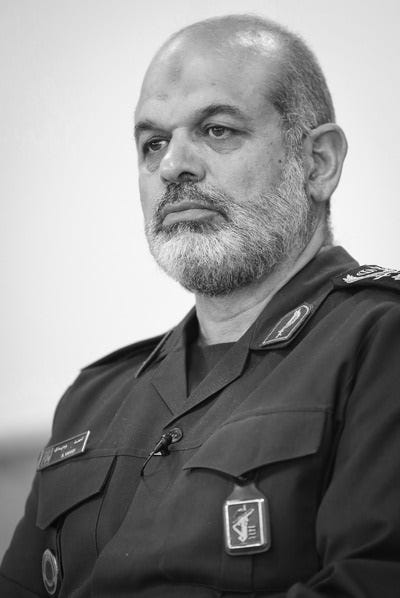
Everyone has noticed that the new men running Iran wear uniforms, not robes. The clerics are still there, but they no longer set the direction. The commentary calls this a hardliner takeover, as if the revolution had simply gone looking for meaner managers.
That reading misses the pattern. What is happening in Tehran is older than the Islamic Republic, older than the men in the room. It has happened before, in this exact region, to revolutions that began with God and ended with the General Staff. The question worth asking is not whether Iran has turned hardline. It is whether Iran has reached the stage every revolutionary state reaches, when the soldier quietly replaces the prophet.
The Pattern Nobody Names
There is a life cycle that movements built on transcendent ideology tend to follow, and it is remarkably consistent.
A founding generation seizes power in the name of something larger than the nation. God, the proletariat, the Arab people, the umma. They are prophets. Their legitimacy comes from the idea, and they spend their lives proving the idea is real.
Then they die.
The generation that follows did not fight for the idea. It grew up inside the institutions the idea built. For them the idea is not a revelation. It is the furniture. They are not prophets. They are administrators, and most of them came up through the one institution a revolutionary state always feeds first, the army or its security equivalent.
And here the substitution happens. The transcendent claim, hard to sustain and easy to doubt, gets quietly swapped for a claim that is concrete, defensible, and far more durable. The nation. Not are you faithful, but are you loyal. Not is this holy, but is this ours.
The ideology is never abolished. That would be a fight nobody wants. It is demoted. It stays on the wall, in the schools, in the language. But it now serves the state rather than commands it. This is the move. Watch for it, and you see it everywhere.
Turkey: The Cleanest Case

Mustafa Kemal did it first and most completely, and he did it from inside the Ottoman officer corps.
The empire he inherited was the seat of the caliphate, the central religious authority of Sunni Islam for four centuries. Kemal did not reform it. He replaced its organizing principle outright. Kemalism set out to substitute a robust Turkish nationalism for Islam as the social glue of the state. The caliphate was abolished. The religious schools were closed, the orders suppressed, religion placed under the strict control of the state through a government bureau built precisely so that faith would serve the national project rather than rival it.
Note the mechanism, because it recurs. Kemal did not eliminate Islam. He nationalized it. He brought spiritual authority under bureaucratic management so that no mosque could ever again become a competing center of power. Religion was made private, personal, and above all subordinate. The state did not become atheist. It became sovereign over God.
And the man who did this was a career soldier carrying the worldview of a military reform tradition into the founding of a republic. The prophet’s chair was not left empty. A general sat in it.
Egypt: The Same Move, In Arabic
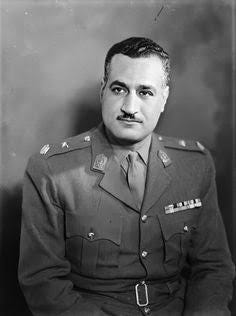
Nasser ran the identical play twenty-five years later, and the tell is what he did to his allies.
The Free Officers who took Egypt in 1952 were nationalists with, in Britannica’s own description, a powerful but vague nationalism rather than a coherent ideology. The Muslim Brotherhood had marched with them against the British and the monarchy. They were partners in the revolution.
Within two years the partnership was over. After a Brotherhood member was implicated in an attempt on Nasser’s life in 1954, thousands were imprisoned, the movement was outlawed, and a generation of its militants hardened in Egyptian jails. Nasser had made his choice between the two organizing principles available to him. He chose the Arab nation over the Islamic umma, and he chose it explicitly, emphasizing the Arab identity of Egypt precisely where the Brotherhood preached an Islamic one.
This is the same substitution as Turkey, pointed in the same direction. The transcendent claim, here pan-Islamic rather than Ottoman, was set aside in favor of the national and the pan-Arab. The men who made the choice were officers. The institution that won was the army. The faith was not destroyed. It was defeated as a rival and then, later, managed as a tool.
Algeria and Pakistan: The Rule, Not The Exception
Two more, briefly, because the pattern only matters if it generalizes.
Algeria won independence in 1962 behind a revolutionary front fueled by both Islam and socialism. Within a generation the army had become the state. When an Islamist party threatened to win an actual election in 1991, the military annulled the vote and governed directly through a decade of war. The lesson the Algerian generals taught was blunt. The revolution belongs to the institution that holds the rifles, and the religious claim is permitted only so long as it does not contest that hold.
Pakistan was founded as a homeland for Muslims, the purest possible religious premise for a state. And yet across its history the decisive actor has not been the mosque but the army, which has governed directly or from behind the curtain for most of the country’s existence, deploying Islam when useful and restraining it when threatening. A state born of faith, run by the General Staff.
Four states. Four founding ideologies. One destination.
So What Is Iran Becoming
Place Iran against these cases and the picture is clear, and it is less flattering than the word transformation suggests.
The founding generation, the men forged in opposition to the Shah and in the trenches against Iraq, were the prophets. Their legitimacy was the revolution itself, and they spent forty years proving it was real. They are now mostly dead, several of them killed in a single morning.
The men who have stepped into the vacuum grew up inside the Republic. They took its legitimacy as furniture. They are not defending a revelation. They are administering a state, and they came up through the one institution the Republic always fed first, the Revolutionary Guard. The test of belonging is shifting from are you Islamic enough to are you Iranian enough. The map is replacing the mosque on the lapel pin.
This is the substitution. Tehran is not inventing something new. It is arriving, on schedule, at the stage Ankara reached in the 1920s and Cairo reached in the 1950s. The soldier is replacing the prophet.
The Closing Turn
Here is what the comparison refuses to let us believe.
The confident reading treats this turn as a sign of strength, a more durable Iran. But look again at what the parallel actually shows. The soldier replaces the prophet not when a revolution is winning. He replaces him when the revelation has stopped persuading and only the rifle is left to hold the thing together. Kemal nationalized Islam because the Ottoman idea was finished. Nasser jailed the Brotherhood because vague nationalism was all the glue he had. The general takes the prophet’s chair at the moment the prophet’s words have gone quiet.
A state that must ask are you Iranian enough is a state that already knows the answer to are you Islamic enough is no longer yes.
The turn to the nation is not the sign of a revolution triumphant. It is the sound a revolution makes when it is over, and the soldiers are the only ones still in the building.
Part Two: The Pattern Without God
Bonjourhi!
The first part left a fair objection unanswered, and I want to deal with it head on. Every example was Muslim. Turkey, Egypt, Algeria, Pakistan, Iran. So a reader could shrug and say this is just something about Islam, not about revolutions in general, and walk away.
Fair enough. Let us test it properly.
Take God out of the story completely. Find a revolution that had nothing to do with religion, and see if the same thing happens. If the soldier still ends up in the prophet’s chair when there was never a prophet in the religious sense at all, then the first part was never really about Islam. It was about what happens to any big idea once the people who believed in it are gone.
A Faith With No God
The twentieth century ran this experiment for us, and it ran it big.
The Russian Revolution was not built on God. It was built on an idea that felt just as certain. History was going somewhere. The workers would get it there. The Party spoke for the workers. If you believed all that, and millions did, it answered everything. Where the world had been, where it was going, and why the suffering along the way was worth it.
The first generation believed it the way the earliest believers always do. They had made the prediction, then watched it come true in their own hands. That is a powerful thing to live through. They spent the rest of their lives defending the idea, and plenty of them died for it.
Then they died, and the people who came next had not made the revolution. They had simply grown up inside it.
The Believers Leave, The Police Stay
If you are born into the faith, it is not a revelation to you. It is just the world. It is the furniture in the room you grew up in. The men who followed Lenin had climbed the ladder of the system, spoken its language since childhood, and learned to run it. They were not believers in the old burning sense. They were managers.
And they came up through the part of the state a revolution always builds first and trusts most. Not the army this time, but its cousin, the secret police. The Cheka, then its many renamings, ending in the KGB. In Russia the secret police played the role the officer corps played in Turkey and Egypt. It was the thing the revolution trusted before it trusted anything else. So it was the thing that eventually ran everything.
Now watch the swap, because it is the same swap as before. The big dream, workers of the world, every country rising together, quietly got smaller. First it became socialism in one country. Then it became, more or less, just the country. By the time the Second World War came, no one was dying for the workers of the world. They were dying for Russia, in words Stalin lifted straight from the Tsars the revolution had killed.
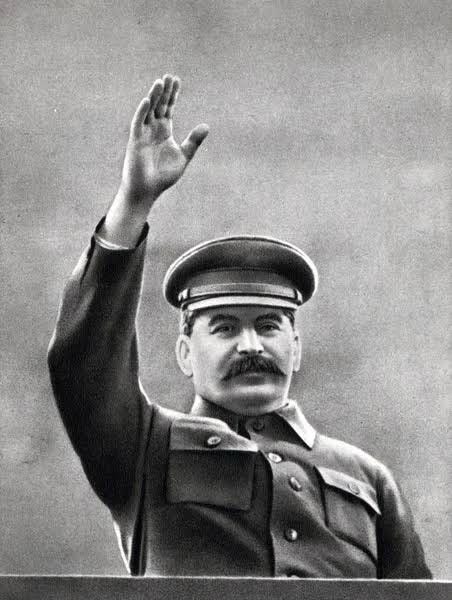
The old creed did not disappear. The posters stayed up. The slogans, the textbooks, the holidays, all still there. But it had stopped giving the orders. Now it took them. Same move as Turkey, same move as Egypt, in a country where nobody was asking if you loved God. They were asking if you were loyal to the nation. And the strange part is that the creed they pushed aside had never been about God to begin with.
China Did It Too, In Its Own Words
China ran the same play, and the clearest place to see it is in how the state treated its own true believers.
Mao was the prophet, and his idea was revolution that never stops. The Cultural Revolution was that idea at full volume, the country tearing up its own institutions in the name of staying pure. It nearly destroyed everything. It was also the last time the idea truly ran the show instead of serving it.
Watch what happened the moment the prophet died, because it is the same scene as Egypt, in another language. Mao was barely a month in the grave when the keepers of the flame were arrested in a single night. The Gang of Four, led by his own widow, were the people who wanted the revelation to keep commanding, and they were taken not by an argument but by the army and the Party security men, the institution the revolution had fed first. The true believers went to prison so the managers could have the room.
Then came Deng, who was a manager, not a prophet, and he all but said so. It does not matter, he said, whether the cat is black or white, as long as it catches mice. That one sentence quietly retired a whole world-changing creed and turned it into a tool. The idea stayed. The Party kept its name and its grip. But the question changed. It used to be, are you pure enough, and that question had almost wrecked the country. Now it was, are you useful, and underneath that, are you loyal.
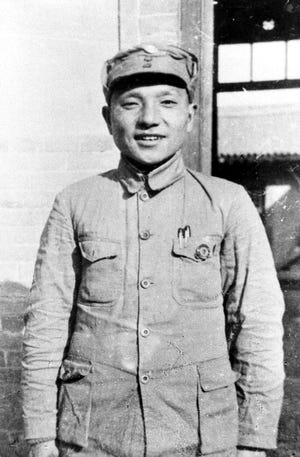
And the part of the state that grew strongest was the familiar one. Not the prophet’s study but the machinery of control and order, now the most sophisticated on earth. The creed is still taught in every classroom. It runs nothing. It serves a national project measured in growth, land, and order, which is exactly what every soldier in this story has ever cared about.
So It Was Never About God
Put the two halves side by side and the easy exit closes.
Four Muslim countries reached this point. Two of the biggest non-religious revolutions in history reached the very same point, by the very same road, through the very same kind of institution. Islam was never the thing driving it. The thing driving it was belief itself, any belief, and what happens to belief when the people who held it are replaced by the people who just keep the lights on.
A big idea is expensive. It runs on faith, and faith is hard to pass down to children who did not earn it. A nation is cheap by comparison. It does not ask you to believe anything. It only asks you to be loyal, and loyalty is something a state can actually enforce. So the second generation everywhere makes the same quiet trade. They give up the costly dream for the durable one. And whoever enforces loyalty ends up holding the country. What no one in this story is willing to keep paying for is the very thing that made the idea worth believing in the first place.
The Same Cycle, A Second Time
Here is the part that should land closest to home, because it is not history. It is the morning news.
Russia ran this whole cycle once already, from Lenin to the long Soviet decline, and then the union fell apart. What rose out of the rubble is the clearest case in this entire essay. The creed is gone. No one in the Kremlin believes in the workers of the world. The man in charge came up through the KGB, the very security organ that inherited the first revolution. The prophet is a century dead, the gospel is ash, and what is left running the country is the organ itself, with nothing above it to answer to.
And notice what it reaches for. Not a new idea. A nation, a bloodline, a holy soil, a Russian world that must be made whole. The war in Ukraine is sold as a sacred cause, but everyone can see the cause was reached for after the fact, to dress up an appetite for land. It is Stalin borrowing from the Tsars all over again, except now there is not even a worker’s paradise underneath the costume. Just the nation and the rifle. After three years of fighting, a stalemate, and a casualty count in the hundreds of thousands, the rifle is most of what remains.
China is at the same place, reading from the same script, in its own language.
The Maoist faith is finished as a living thing. What governs now is a security state of extraordinary reach, with the creed kept on the wall and commanding nothing. So watch where the legitimacy comes from instead. In his 2026 New Year message, Xi called reunification with Taiwan an unstoppable trend of the times, and he made the claim not on ideology but on blood. Compatriots on both sides of the strait, he said, bound by kinship thicker than water. That is the whole substitution in one sentence. Not are you a good communist. Are you of the nation, by descent, whether you wish to be or not.
The same logic turns inward, and there it is harder. A state that defines belonging by loyalty to the nation cannot abide a people with a rival faith of their own. Tibet learned this decades ago. The Uyghurs are learning it now, which is why a competing religion is treated not as a private matter but as a security problem to be managed. The outward claim on Taiwan and the inward grip on the west of the country are the same move pointed in two directions. Belonging is loyalty, and loyalty is enforced.
Two of the most powerful states on earth, both born from a transcendent idea, both now run by the security organ that outlived the idea, both reaching for blood and soil because the revelation has gone silent. This is not a forecast. It is where they already are.
There is a comfortable way to read all of this, and it is worth taking away before the last case. The comfortable read is that this is a story about communism, or about Islam, or about whatever creed you already distrust. It is not. It is a story about what any founding faith becomes once the founders are gone and only the institutions remain. The kinder and more noble your own founding story feels, the more the next case should unsettle you, not less.
The One That Did Not
Every rule worth trusting has to meet the case that breaks it. Here is the one that breaks this one, or seems to.
America had the founding idea, as transcendent as any in this essay. Liberty, self-government, all men created equal. It had the founding generation of prophets. And then they died, and by every pattern in these pages the soldier should have come for the chair. Instead, the most famous thing Washington did was give the power back, and go home to his farm.
Then came the harder test, the one that should have ended it. By 1861 the creed had stopped persuading half the country. The shared idea had gone quiet, which is the exact condition that everywhere else brings the rifle into the prophet’s chair. And the rifle did come out, on a scale that dwarfs most revolutions. At the end of it one army stood victorious, a million men under arms, led by a general who had just won the largest war the continent had ever seen.
Watch what happened next, because it is the whole point.
The army went home. Within months the million men became fewer than a hundred thousand, and within three years the force was a twentieth of its wartime size. The general who won did not take the state. He waited, and was later elected to it, not in uniform but in a plain suit. And the creed was not demoted to furniture guarded by the victors. It was rewritten to mean what it had always claimed. Three amendments ended slavery, granted citizenship, and barred the denial of the vote by race. The war that should have killed the revelation was used to extend it to the people it had left out.
So the pattern is not a law of nature. It is escapable. The question is how, and the answer is the useful part.
America did not escape because its idea was truer than the others. Every revolution thinks that, and we have seen where it leads. It escaped because it had built the machinery to keep the idea persuading. Courts, elections, the division of power, a written creed that any generation could pick up and argue over again. Where Iran’s old question, are you Islamic enough, no longer gets a confident yes, America kept its question alive by letting people fight about it forever, in the open, without the rifle. The faith survived because it was built to be contested rather than enforced.
And that points at the only thing worth saying about today, which is a question, not a verdict.
The machinery that renewed the creed in 1865 was not free. It was the most expensive thing the country ever bought, paid for in more dead than every other American war combined. Coherence is always purchased, never given. The founders did not buy it once for all time. Each generation has had to pay again to keep the idea persuading, so that belonging never quietly hardens from are you faithful to the idea into are you loyal to us.
The soldier takes the prophet’s chair when the faith goes quiet and only force is left. The only country in this essay that kept him out is the one that kept paying to keep the faith loud.
The question every such country eventually faces is not whether it is the exception. It is whether it is still making the payment.
BONJOURHI! INSTITUTE ANALYTICS · MONTREAL · 2026