

Bonjourhi!
In 1848, a Scottish botanist shaved his head, fixed on a false pigtail and walked into China’s tea country. He came out with 20,000 plants and helped break China’s hold on the world’s tea.
Today China holds another monopoly. Warm Water asks what it would take to break it, and why the answer has more to do with the weather than with tariffs. Its short companion, Cold Water, follows the same storm north, to a coast that has always relied on cold seas for protection.
I would value your read, and any point you think either gets wrong.
Pierre Somers
Chief Editor
Bonjourhi Institute, Montreal
Warm Water
The Meteorology of Dependence
In June 1839, on the shore at Humen, Lin Zexu, the emperor’s commissioner sent to end the opium trade, wrote an apology to the sea. He was about to pour twenty thousand chests of British opium into it, and he asked the fish to swim away first.
Lin could destroy the drug. He could not touch the need that made it valuable.
Forecasters have a habit worth borrowing here. They look past the wind to the water beneath it. We follow great-power rivalry through speeches and summits, while the conditions that decide whether it strengthens or fades lie lower down, in what nations need from one another.
A hurricane is a simple machine with exacting requirements. It draws its heat from seawater warmer than about 26 degrees Celsius, and its wind from the difference in pressure between the eye and the surrounding air. Moist air rises and its vapor condenses, releasing energy that deepens the low and pulls in more of the same. While the ocean stays warm and the gradient steep, the system feeds itself.1
Rivalries run on the same engine. The imbalance between what nations buy and sell is the pressure gradient, and dependence is the warm water, since a lever works only on someone who cannot do without what you hold. This is an analogy, not a physical law, but it turns attention from the noise of a confrontation toward what sustains it.
Britain and China raised such a storm in the 1830s. China and America are raising another now, and this time there are ways to cool the sea.
By 1800, tea had become the daily ritual of British life, from Mayfair drawing rooms to the kitchens of Lancashire mill workers. China grew nearly all of it, and the Qing court wanted almost nothing Britain made. The account was settled in silver, and year after year the bullion sailed east and stayed there.2
The remedy grew in Bengal. The East India Company held a monopoly on Indian opium, auctioned it in Calcutta and left the smuggling to private merchants, keeping its own hands formally clean. In Patna, boys worked the stacking rooms from dawn, turning each ball so it would not mould. By the 1830s the current had reversed. Manchester sold cloth to India, India shipped opium to China, and China paid in silver, which London then spent on tea.3
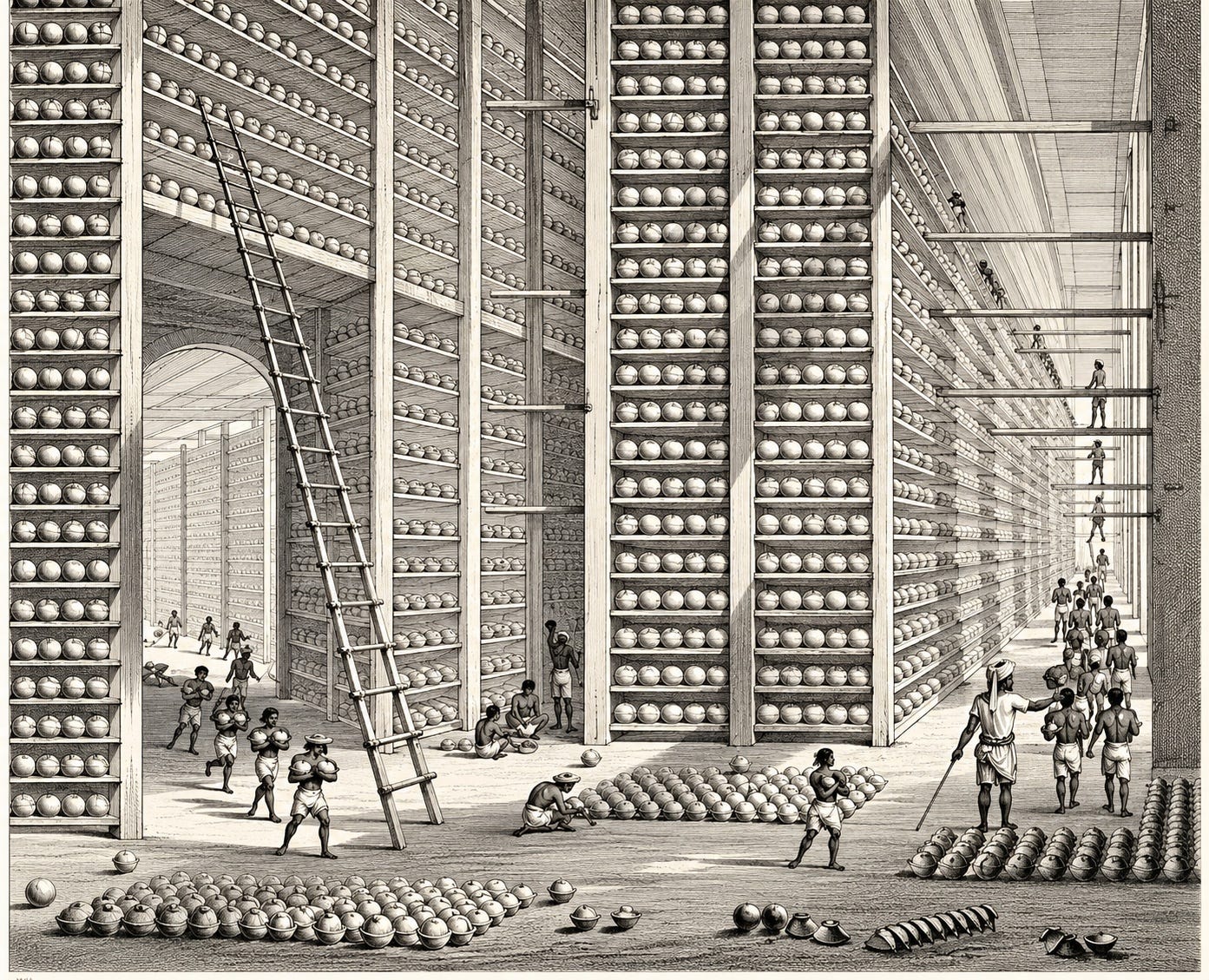
When Lin’s opium reached the sea, Britain invoked free trade and national honor. The Treaty of Nanking was blunter: Hong Kong, five open ports, a heavy indemnity. Opium itself stayed illegal. It was never the prize. It was the warm water Britain sailed on, and China had no way to cool it.4
Turn the ledger around and the shape returns. For a quarter century, American households have furnished their lives with Chinese goods, from phones and sneakers to the lights on the Christmas tree, paying in dollars that circled back into Treasury bonds. The workshop has moved to Guangdong, and the anxious buyer now lives in Washington.
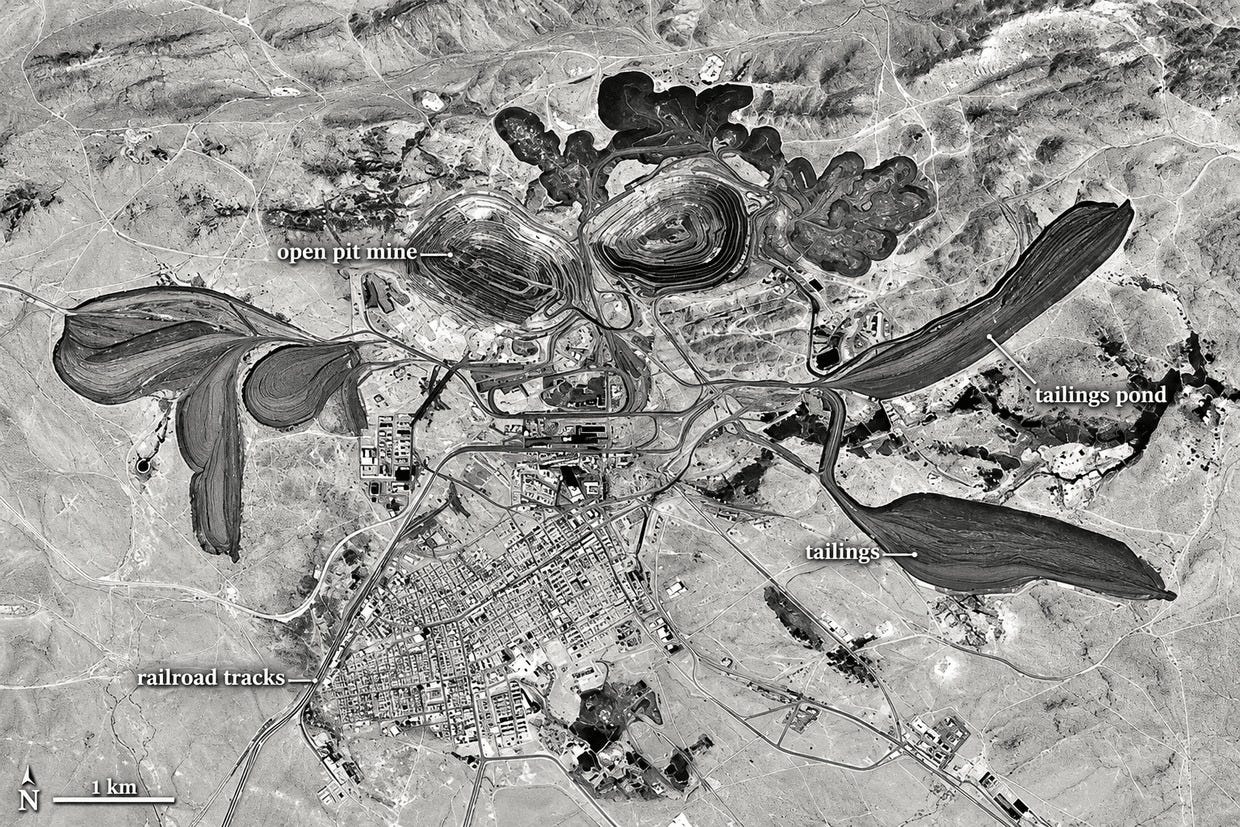
Beijing has found its own source of heat, and it is not a drug. In 2024 China refined 91 percent of the magnet rare earths and made 94 percent of the magnets themselves. These metals go into every electric motor, guided missile and wind turbine. When exports were tightened in 2025, a Ford assembly line in Chicago went quiet for a week, waiting for parts.5 The pause Beijing granted on its widest controls expires on November 10, and the September 24 summit in Washington did not extend it.
Washington holds levers of its own: the most advanced chips, the machines that make them through its allies, and the dollar. It can also stop buying, and China can answer in kind, as Iowa soybean farmers discovered that same year.6
Something strange happens when two storms come too close. In 1921 the Japanese scientist Sakuhei Fujiwhara, studying eddies spinning in tanks of water, described the behavior of two whirlpools that meet. Once hurricanes pass within about 1,400 kilometres of each other, each begins to steer the other. They stop travelling their own paths and start to orbit a point between them, turning faster as they draw closer.7
It is known as the Fujiwhara dance, and for one partner it is often a dance of death. Sometimes the storms spin apart and go their separate ways. Often the larger draws the smaller into its circulation, strips away its clouds and absorbs what remains. Occasionally the two merge into something bigger than either. Until the dance ends, no one can say which it will be, and every forecast bends with them.
Washington and Beijing are in that dance now. Neither moves freely any longer; every tariff and export ban pulls the other off its path. Which ending follows is the real question, and the remedies described below are also the ways to let two storms drift apart before one devours the other.
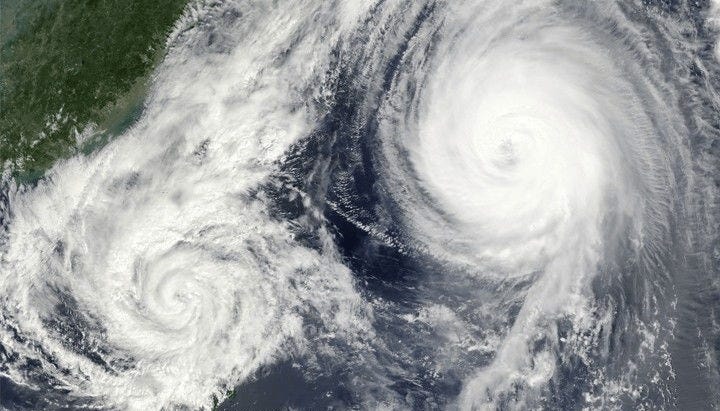
A hurricane is also more fragile than it looks on the radar. Steer it over cooler water and the fuel runs out. Pull dry air into its core and the towering clouds collapse. Starved of both, the central pressure rises, forecasters say the storm is filling, and the wind eases. Most hurricanes die at sea this way, quietly, long before anyone boards up a window.
Rivalry weakens along the same paths, and unlike the Atlantic, nations can choose. New suppliers cool the water: mines and refineries from Australia and California to Saskatchewan, none yet a match for Bayan Obo, each lowering the temperature of a sea Beijing alone once heated.8 Mines alone will not do it. Projects outside China are adding mining capacity far faster than refining or magnet making, and the hardest part lies between a discovery in the ground and a part in a motor. Buying elsewhere draws in dry air, as Mexico, Vietnam and India now make much of what once came only from Guangdong.9 Selling more to China, from soybeans to aircraft to natural gas, fills the low. It can look like a concession. It is the most direct way to take pressure out of the system. None of these tools is dramatic. That is why they can outlast a threat.
China in 1839 had none of these options. It had no other markets to lean on and no navy to match Britain’s steamships. Its only tool was prohibition, and prohibition without power is defiance aimed at the wind. The storm came ashore anyway, and Chinese schoolbooks still call what followed the century of humiliation.
History, economics and meteorology teach the same patient lesson: storms are rarely stopped by confronting them, and often undone by quietly changing what lies beneath.
Washington has spent recent years cutting the agencies that read the oceans. It may need their habits of mind more than ever.
In 1839, Lin Zexu could only apologize to the sea. Today both capitals can change it, through mines, ports and purchase orders, far below the wind. The speeches will stay loud. The water will decide.
Bonjourhi Institute Analytics, Montreal
Author’s note: Monopolies rarely last
China has lost this game before. Around 552, monks smuggled silkworm eggs to Constantinople in hollow canes, and Rome’s silk bill began to fall.10 In 1708, a Saxon alchemist named Böttger cracked the formula for porcelain, and Meissen opened two years later. Tea already grew wild in Assam, but in 1848 the East India Company wanted China’s plants and know-how, and sent the botanist Robert Fortune in disguise to fetch them. He came out with some 20,000 plants and workers to tend them. The Assam plantations, built at a grave human cost, mattered more in the end, and by 1890 India supplied most of the tea Britain drank. The asset that had drained Britain’s silver was gone within a generation.11
Rare earths followed the same path in reverse. Until the 1980s, the world’s leading producer was California’s Mountain Pass. China won the trade with lower costs and state support, and now protects it as the Qing once tried to protect tea. Since 2023, Beijing has banned the export of refining and magnet know-how, calling it a reply to American chip controls. A mine can be dug in a few years. The skill to process what comes out of it takes far longer.12
None of this means China is waning. Cool one coast and a storm does not die. It moves, and the pressure is already landing on Europe and on markets from Brazil to Indonesia. At home, a shrinking population, the collapse of apartment savings and graduates without work all point to the same unfinished task, getting Chinese families to buy what Chinese factories make.13 History suggests only that monopolies fall, to a smuggled seed, a captured craftsman or a patient chemist, and sooner than the monopolist expects.
Notes
1. The US National Hurricane Center gives about 26.5 degrees Celsius as the threshold.
2. On the tea and silver trade and the triangle that followed: Stephen R. Platt, Imperial Twilight: The Opium War and the End of China’s Last Golden Age (Knopf, 2018); Julia Lovell, The Opium War: Drugs, Dreams and the Making of China (Picador, 2011).
3. John F. Richards, “The Indian Empire and Peasant Production of Opium in the Nineteenth Century,” Modern Asian Studies 15, no. 1 (1981). Sherwill’s seven Patna lithographs were shown at the Great Exhibition of 1851; Wellcome Collection, reference 25037i.
4. Lin Zexu destroyed more than 20,000 chests at Humen in June 1839. The Treaty of Nanking (1842) ceded Hong Kong, opened Canton, Amoy, Foochow, Ningpo and Shanghai, and imposed an indemnity of 21 million silver dollars. Opium imports were legalized only after the Second Opium War, in the tariff settlement of 1858. Before the destruction began, Lin composed a sacrifice to the spirit of the sea, apologizing for the poison and urging its creatures to move away.
5. International Energy Agency, Rare Earth Elements (2026), using 2024 shares for magnet rare earths, and Global Critical Minerals Outlook 2026. Ford’s one-week halt of Explorer production in Chicago in May 2025, caused by a shortage of rare earth magnets, was reported by the New York Times and Reuters. On the September 24, 2026 summit: The Diplomat, “Rare Earths at the Trump-Xi Summit: Relief Without a Resolution.”
6. China suspended purchases of American soybeans for much of 2025, resuming only after the trade truce reached in late October.
7. On the Fujiwhara effect: Sakuhei Fujiwhara, “The Natural Tendency towards Symmetry of Motion and Its Application as a Principle in Meteorology,” Quarterly Journal of the Royal Meteorological Society 47 (1921).
8. Lynas processes Australian ore at Kuantan, Malaysia. In July 2025 the US Department of Defense agreed to become the largest shareholder in MP Materials, owner of Mountain Pass. The Saskatchewan Research Council operates a rare earth processing facility in Saskatoon. On mining outpacing refining and magnet capacity outside China: IEA, Global Critical Minerals Outlook 2026.
9. US Census Bureau, annual trade data for 2023.
10. Procopius, History of the Wars, Book VIII, on the monks who brought silkworm eggs to Justinian.
11. Sarah Rose, For All the Tea in China: How England Stole the World’s Favorite Drink and Changed History (Viking, 2010); Royal Botanic Gardens, Kew, “The history of tea: From China to India” (2015), on tea in Assam before Fortune. On Meissen: Janet Gleeson, The Arcanum (1998).
12. Mountain Pass led world rare earth production from the 1960s into the 1980s. China restricted exports of gallium and germanium in August 2023 and of graphite in December 2023, when it also banned the export of rare earth extraction and separation technology; wider licensing rules announced in October 2025 were suspended under the November 2025 truce until November 10, 2026; the April 2025 licensing requirements for seven heavy rare earths remain in force.
13. The European Union imposed duties on Chinese electric vehicles in October 2024. China’s population has declined each year since 2022, according to its National Bureau of Statistics. On the property slump and household consumption: International Monetary Fund, People’s Republic of China: Article IV Consultation, annual staff reports; Matthew C. Klein and Michael Pettis, Trade Wars Are Class Wars (Yale, 2020).
Cold Water
The Meteorology of Independence
A companion to Warm Water
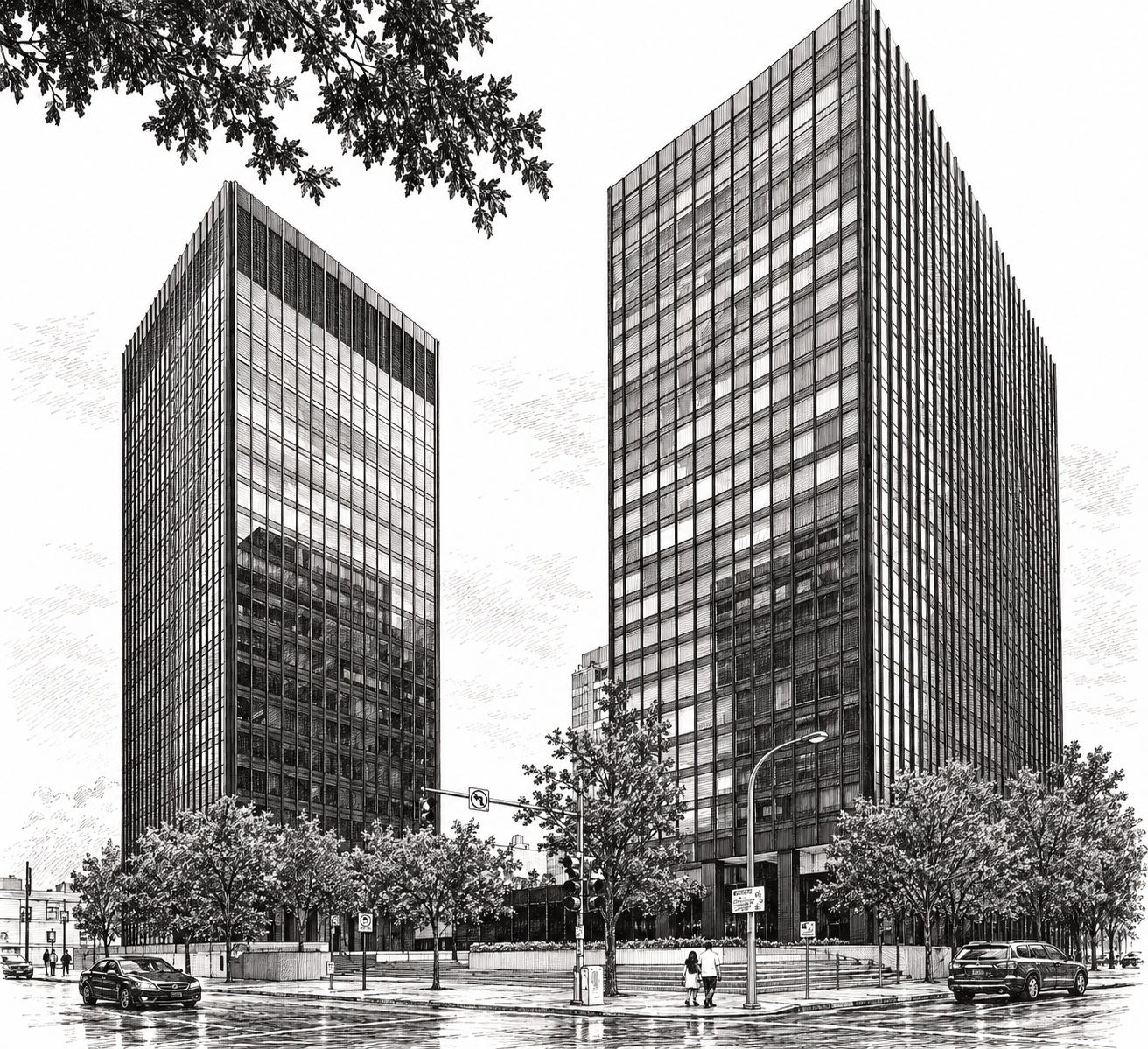
In November 2024, two months before he entered politics, Mark Carney spoke at a dinner on the 18th floor of Westmount Square hosted by one of Canada’s fastest growing multi-asset managers. The room was unanimous that he should run for prime minister. The evening never reached its end. Outside, a large crowd of pro-Palestinian demonstrators protesting the war in Gaza had gathered, and the dinner was cut short.
Four months later, Carney was prime minister. The weather outside has a way of arriving before anyone inside is ready for it.
A hurricane can carry its wind north. It cannot carry its warm ocean with it. The Labrador Current runs cold down Canada’s Atlantic coast, and most storms arrive exhausted, their heat drained by the water, though cold water changes a storm’s engine without promising safety. The storm bearing down on Canada now is economic, and the same caution applies.
If the storm follows the warmest water, why has it spent the autumn over Ottawa rather than Beijing? Dependence is the answer. In 2025 Canada still sent 71.7 percent of its merchandise exports south.1 No major economy offers Washington warmer water.
China cooled its side by restricting rare earths, and within months it had a truce. Canada holds oil, electricity, potash and aluminum, all vital to American industry, but leverage is not the same as freedom to use it. Retaliation may buy room to negotiate; it cannot give a Canadian exporter another customer. On August 22, Washington imposed 50 percent tariffs on C$27.6 billion of Canadian goods. Ottawa answered in kind on September 8, and bans on some Canadian imports begin on September 29.2
Measured by the metrics of alliance, shared defense, integrated supply chains and a century of trust, none of this makes sense. Measured by heat, it does. Closeness is exposure, and the partner who trusted most has the least to cool with.
Carney had forecast it. At Davos in January, he warned that the old order was not coming back and that middle powers had to act together, because “if we’re not at the table, we’re on the menu.”3 In August he acted on it. In the final hours of talks, American negotiators sought to restrict Canada’s ability to strike deals with other countries and pressed on protections for French, down to bilingual labels. Carney walked away, and the US trade representative called the French-language complaint a fake story.4
A limit on Canada’s other partners was an attempt to hold the smaller storm in orbit. When Typhoon Namtheun formed between two giants in 2010, the larger Typhoon Lionrock absorbed it within two days.5 Refusing the deal kept Canada’s own circulation.
In Toronto in mid-September, Ottawa went looking for colder water, announcing close to $500 billion in investment commitments at the Canada Investment Summit.6 A commitment is not an operating mine, but it is how one begins.
Warm water is not enough to organize a hurricane. Strong winds that shift with height can tilt its circulation and pull the rising clouds away from its centre. Forecasters call this vertical wind shear. Canada faces a shear of its own. Ottawa can announce new markets and investors can promise capital, but provinces, permits, transport links and factories must move in the same direction. If they do not, the country may have the resources to become less dependent without ever assembling the means, and diversification will remain a speech delivered beside an unfinished railway.
The storm is also thinning. Hurricanes weaken when dry air enters their circulation, and American opinion has turned dry: in a Reuters/Ipsos poll in late August, 57 percent of Americans opposed the new tariffs on Canada and only 20 percent supported them.7 A stalled storm also cools its own water, and every month of tariffs pushes Canadian firms toward Europe, Asia and each other.
In the atmosphere, the giant usually wins, swallowing nearby storms or tearing them apart. Nations have an advantage storms lack: they can see the giant coming and turn toward one another. Together, Canada, the European Union, Britain, Japan, South Korea and Australia produce more than the United States.8 Europe already has trade agreements with Canada, Japan and Korea, and concluded negotiations with Australia in March, though that deal awaits signature.9 Joined by shared supply chains and common rules, these middle powers would form a weather system too large to be steered and too broad to be pulled in.
The same shear threatens them. Germany still sells heavily in China, Japan and Korea carry old grievances, and Europe decides at the pace of twenty-seven governments. A coalition that aligns in speeches but diverges in practice would tilt apart before it ever organized.
None of this means turning away from the United States. A neighbor can remain a close partner without being the only indispensable one.
Canada cannot move the storm. It can choose how much warm water lies beneath it, and it need not choose alone.
Bonjourhi Institute Analytics, Montreal
Author’s note: Toward Translation Machine V5
These two essays are also a field test. The Bonjourhi Analytics team has been working to bring the laws of thermodynamics and the basic analytical tools of meteorology into the Translation Machine, and Version 5 will read dependence the way a forecaster reads the ocean.
Thermodynamics supplies the discipline. Energy flows from warm to cold, no system runs without a gradient, and disorder rises unless work is done to hold it back. Meteorology supplies the instruments: pressure maps, sea surface temperatures, measures of shear and dry air, and forecast cones that widen honestly with uncertainty. In the language of Coherence Economics, an organized storm is coherence compounding, and shear is decoherence at work.
Together they let us ask of any rivalry or alliance the questions asked here. Where is the warm water? How steep is the gradient? What is tilting the system apart? The storms in these pages are the first readings. More will follow.
Notes
1. Statistics Canada, “Canadian international merchandise trade, December 2025,” The Daily, February 19, 2026. The share fell from 75.9 percent in 2024 to 71.7 percent in 2025 and refers to merchandise exports only.
2. Congressional Research Service, “U.S.-Canada Trade Relations,” September 16, 2026; Government of Canada, Department of Finance, counter-tariff backgrounder, August 2026. C$27.6 billion is the Canadian government’s figure for affected goods.
3. Mark Carney, “Principled and Pragmatic: Canada’s Path,” special address, World Economic Forum, Davos, January 20, 2026.
4. Prime Minister’s statement and press conferences on the failed Canada-US negotiations, Ottawa, August 2026; CBC News and CNN reporting, August 22 to 26, 2026.
5. Hong Kong Observatory, “Fujiwhara Effect,” November 19, 2010. Namtheun formed on August 30, 2010 and was absorbed into Lionrock’s circulation on September 1.
6. Canada Investment Summit, Toronto, September 14 and 15, 2026; The Globe and Mail reporting, September 2026.
7. Reuters/Ipsos poll of 1,023 US adults, August 28 to 30, 2026. An Economist/YouGov poll of the same week found 58 percent opposed.
8. International Monetary Fund, World Economic Outlook, 2025 estimates of GDP at market exchange rates.
9. Joint statement of António Costa, Ursula von der Leyen and Anthony Albanese, New York, September 21, 2026. Negotiations were concluded on March 24, 2026.
BONJOURHI INSTITUTE ANALYTICS · MONTREAL · OCTOBER 2026