
Bonjourhi!
Two centuries ago, in the Scottish Highlands, landlords discovered they could make more from a glen full of sheep than a glen full of people. The people were not hated.
They were simply worth less than the alternative, and so they were removed, some by a quiet accounting and some by fire. The word the landlords used for it was improvement.
These two letters are about the same discovery, made again, here, now.
One is cold, and arrives as a rising bill beside a humming data center.
The other is hot, and arrives as a van at the edge of a field.
They look like different stories. They are the same story told twice, and it is older than either.
Read together, they leave a reader with a single question, the one the Highlanders were left with and answered only at great cost. When a country no longer needs you, or decides it never did, what exactly are you still owed?
Pierre Somers
Chief Editor, Bonjourhi Institute
Montreal, Quebec – September 2026
Cleared for Sheep
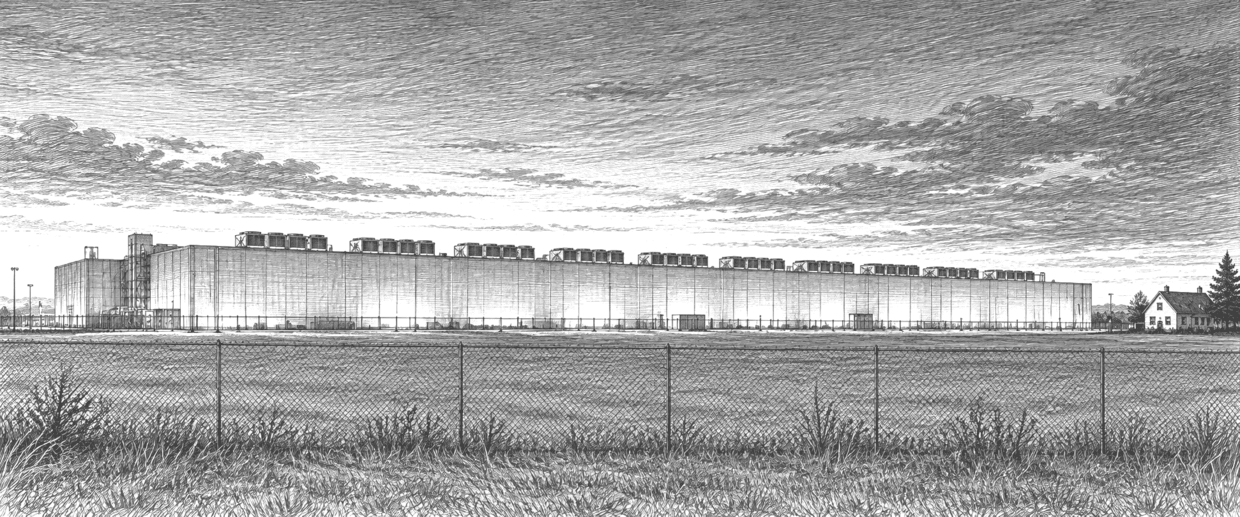
In a county outside Atlanta, a mother opens her power bill and reads it twice. In a hot month it has nearly doubled. A few miles away, behind a chain link fence, a windowless building the size of a mall runs cold and bright through the night, drinking more electricity than the whole town around it.
She has never been inside it. No one she knows works there. Georgia is racing to become the country’s next data center capital, and the arithmetic of that race is arriving on kitchen counters.
The family has not been told it is unwanted. Something quieter has happened. The land around them has been priced, and the price is for something that is not them. Nobody has moved against them. They have simply been counted, and come up short. There is a word for that, though it belongs to another century.
The word is clearance.
Begin with the hills, not the servers.
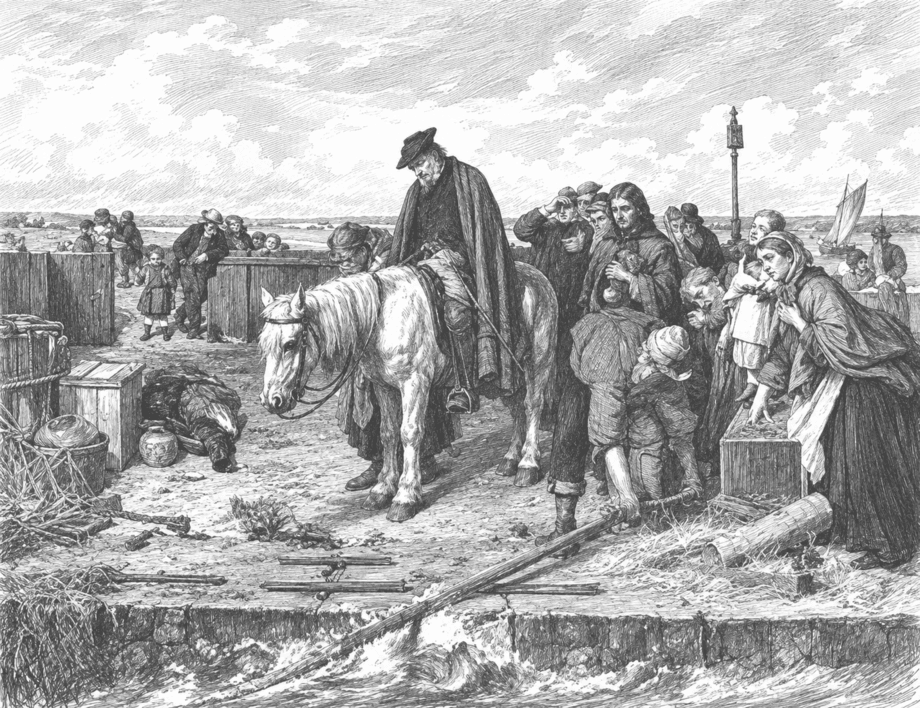
In the Scottish Highlands, across roughly a hundred years, landlords discovered that a glen full of tenants was worth less than the same glen full of sheep. Cheviot wool paid. Small farmers, at their old rents, did not. The tenants had done nothing wrong. They had not grown lazy or rebellious. They had simply been outbid by animals.
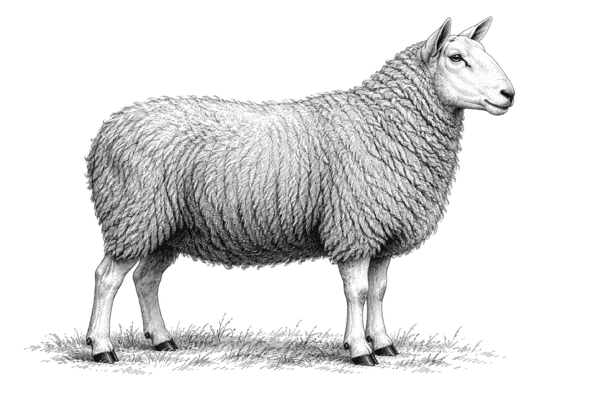
On the Sutherland estate alone, something like fifteen thousand people were removed to make way for two hundred thousand sheep. This was not a war. It was a valuation.
Notice how it was described at the time. The landlords did not call it eviction. They called it improvement.
That word is the whole thing.
Look at the ones in the picture. A man on a borrowed pony, hat in place, going nowhere a horse is needed. A woman with a child on her hip and a box at her feet holding what a life reduces to when it must be carried.
They were not hated. They were surplus. A tenant produces rent, and rent is a form of being needed, and being needed is a form of standing. When wool could pay more than a family could, the standing evaporated, and everything that standing had quietly protected went with it.
Those cleared were not usually killed or even, at first, sent far. They were moved to the poor edges of the estate, the coast, the thin soil, and told to make a living from fishing and kelp, work they did not know. Their rank fell from farmer to crofter.
That fall, more than the cold or the hunger, was the injury people remembered. To be made lesser on the same ground your family had always worked is a particular wound. It is the wound of learning that your worth was never yours to keep.
Now come back to the county outside Atlanta, and keep one word in your pocket for later. Protection. Notice, when it comes, who is offering it, and what it quietly says about the people being protected.
The data center is the sheep, and the compute it produces is the wool. Quiet, profitable, indifferent to the people nearby, it turns land and power directly into a commodity sold far away. It has no use for their work.
It wants their land, their water, their share of the grid, and their permission, and of these only the last still offers any grip at all. The facility will pay more for the electricity flowing into the town than the townspeople can pay by living there.
That is the entire equation, and it is the one the Cheviot solved two centuries ago. Where a person’s contribution is worth less than the alternative use of the ground they stand on, that person becomes, in the ledger that decides things, a cost.
Something should be granted here, because the honest case is not nothing. The building will widen the tax base. It will hire a few and buy from a few more. The compute it makes will run in the reader’s own phone, this reader included. None of that is a lie. It is only beside the point, because a tax payment is not the same thing as being needed, and a handful of jobs is not the same thing as a claim. And as before, no one will call the larger thing what it is.
It will be called growth. Investment, modernization, the future arriving early. Improvement, in other words, wearing this year’s clothes. The vocabulary is always gentle, because the gentleness is the point. A clearance announced as a clearance invites resistance. A clearance announced as improvement invites gratitude.
Now take the word back out of your pocket. Consider Georgia’s most telling move. Faced with data center demand threatening to land on ordinary bills, the state froze residential rates. There is the protection, handed down from above to households whose own leverage is thinning.
Read the grammar of that carefully. Once, a person defended their interests by withholding something the powerful needed. Now those interests are defended for them, as a kindness, by the same system that is pricing their worth.
The Highlander understood this too. In the end, what stood between the crofter and starvation was not any bargaining power, which was gone, but the charity of landlords, churches, and the state. Protection is what arrives to replace leverage once leverage is lost. It is the first comfort of the cleared.
And here is the part an American reader should not be allowed to file under foreign history. It has already happened there, more than once, under other names. The mill town emptied when the mill found cheaper hands abroad.
The coal town emptied when the seam ran out or the market turned, and the people who had been the whole point of the place became, overnight, its leftover population. Whole counties now run on transfer payments drawn from wealth made somewhere else, checks arriving where a payroll used to be.
Those places are not a warning about the future. They are the glens America has already cleared. Atlanta is not being told a cautionary tale. It is being shown its own recent past, moving south.
But America also knows the other half of the story, and knows it more recently than Scotland does. When the market ruled millions surplus in the nineteen thirties, the country did not wait to be needed again. It built old-age pensions, it wrote the rules of labor, it made the vote harder to strip.
A people the market had written off forced its way back into the reckoning, at continental scale, within living memory. This is not a question of whether such a thing can be done. The country already did it once, and then, slowly, forgot that it had.
This is where the analogy earns its keep, and also where it turns.
Because the Highland story did not end on the coast. In 1886, after a century of removals and one stubborn generation that refused to go quietly, Parliament passed the Crofters Act, and the crofters were granted security of tenure, protection from eviction, and a court to set fair rents.
Notice what that was. Leverage rebuilt by law, deliberately, after it had been destroyed by economics. The market had ruled the people surplus. A political act ruled that they were not.
The lesson is not that clearance is inevitable. It is that when the economy stops needing people, only politics can write them back into the equation, and only if they insist on it while they still have a voice to insist with.
So the real question is not whether the machines will come to need fewer workers. They will. Wool needed few shepherds, and the server needs fewer still.
The question is whether being needed will remain the price of being counted. For a thousand years it was. People mattered because the powerful could not do without their labor, their taxes, their sons, their yes.
Strip out the need and the mattering does not vanish overnight. It thins into something offered rather than owed. A protected rate. A mailed stipend. A place at the table you keep by permission and not by right.
The crofters were not asking to be pitied on the coast. They wanted to be needed on their own land again, and when that proved impossible, they did the only thing left. They made the law need them instead.
The family outside Atlanta still holds the one thing the industry cannot generate for itself. Their permission. It is, for now, a real fence. The men who cleared the Highlands would have known that mother on sight, standing at the counter, still holding the deed to something the powerful want, still offering something they have decided they can do without.
They cleared the glens for sheep. What the mother at the counter is deciding, though the bill in her hand does not say so, is whether her place at the table is still hers because of what she brings to it, or hers because someone has chosen, for now, to keep it set.
A seat kept warm by a host who is free one day to stop keeping it is not the same seat. It only looks the same until the day it is cleared. She still holds the deed. The question is whether she uses it while it is still a deed, and not yet a favor.
A NOTES ON SOURCES
This essay is written in response to Stephen Holmes, whose argument that artificial intelligence threatens democracy by making elites less dependent on ordinary people supplied the question at its center. The historical frame and the conclusions drawn from it are the author’s own.
On the Highland Clearances: between roughly 1811 and 1821, an estimated fifteen thousand people were removed from the Sutherland estate to make way for some two hundred thousand sheep, one estate among many across a century of clearance. The Crofters Holdings (Scotland) Act of 1886, passed after organized agitation that included rent strikes and land raids, granted security of tenure and brought the Clearances to an effective end.
On the present: in 2025, faced with surging electricity demand from data centers, Georgia regulators moved to freeze residential base rates in order to keep that demand from being passed on to ordinary households.
The Hot Clearance
A companion to “Cleared for Sheep”
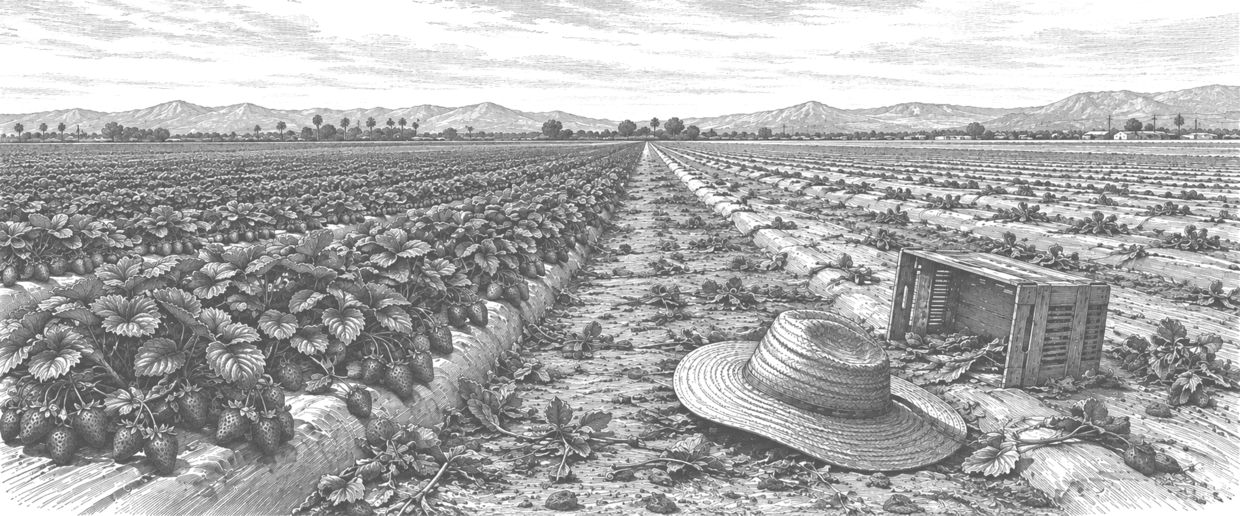
In a field in Ventura County, the strawberries are ready and the rows are half picked. The people who were picking them are gone. Not laid off, not priced out. Taken. A van came, and the difference between a full crate and a rotting one climbed into it with their hands still stained. The fruit does not know the argument that emptied the field. It only knows that no one came back after lunch.
There is a cold way of removing people, the subject of an earlier letter, in which no one is driven out at all. A place simply becomes worth more without its people, and they thin away under a rising bill or a bought-out lease, the loss dressed as progress. This letter is about the hot way, the van rather than the ledger, and the two are nearer kin than they look, because they descend from a single event.
Return to the Highlands, to the part the first letter left in shadow. The clearances were not only a valuation. They were also, in places, a fire. In the Sutherland removals, townships were burned, roofs pulled down and thatch set alight so the people could not creep back to the shells of their homes.
The most notorious of the men who ran them was tried for the death of an old woman in a house fired while she was still inside, and acquitted by a jury of landowners. So the same event gives us both clearances, the sheep replacing the crofter by arithmetic and the crofter burned out by force. A clearance can be a ledger. It can also be a torch.
There is a further thing the fire reveals that the ledger hides. The cold clearance is blind to who its people are, it removes whoever the ground can be worth more without. The hot clearance is aimed.
The Gaels were not cleared only as tenants but as Gaels, a people the improving class held to be backward, their language and their faith marks of a lower kind of life that progress was entitled to erase. The valuation did not care who you were. The torch did.
And that is the closer parallel to the field, because the van, too, is aimed, selecting its people by nationality and origin and not merely by the labor they happen to sell. There is even an old irony in it, a broadly Christian country clearing the Christian poor who feed it, as an improving Protestant establishment once cleared the Catholic poor of the glens, the faith of the cleared no protection then and none now.
Removal by identity is what the hot clearance and the burning share, and what neither shares with the sheep.
Hold the two side by side, because their difference is the whole point. The cold clearance removes people who are no longer needed, which is the grim logic that lets it call itself efficiency. The hot clearance removes people who are still needed.
The hands taken from Ventura County are not surplus to the strawberry harvest, they are the harvest. Across American agriculture the majority of the workforce is foreign born, and much of the back-breaking, weather-bound work of picking and packing and slaughtering is done by people without secure papers.
When they are taken the crop is not reassigned. It rots, the price of produce climbs, the dairy runs short of hands at four in the morning. This is removal against the grain of the economy’s own needs, and everyone administering it can see as much.
Which is the puzzle. If the cold clearance at least pays, why run a hot one that plainly does not? The operation costs more than it returns, thins the workforce of industries the country depends on, and raises prices in a season when prices are already the public’s chief complaint.
And it is not only the money. As the enforcement grew more aggressive, marked by documented episodes of violence and overreach, public opinion turned against it, and kept turning, across every party and age group, until a solid majority thought it had gone too far.
The remarkable thing is what happened to the two justifications a program like this usually leans on. The economic one was gone. The democratic one, the claim to be doing what the public wanted, was going.
And still, in 2025, it was funded on a scale that made a single enforcement agency the largest in federal law enforcement by budget, with tens of billions directed to detention built and run largely by private contractors. Built at great cost, and continued past the point where either money or votes could still explain it.
A policy that has lost the ledger and is losing the ballot, and proceeds anyway, is answering to something other than either. That is the whole of it.
When a program outlives both the money case and the mandate and is built larger regardless, its persistence is not a sign that the reasons still hold. It is a sign that the reasons were never the point.
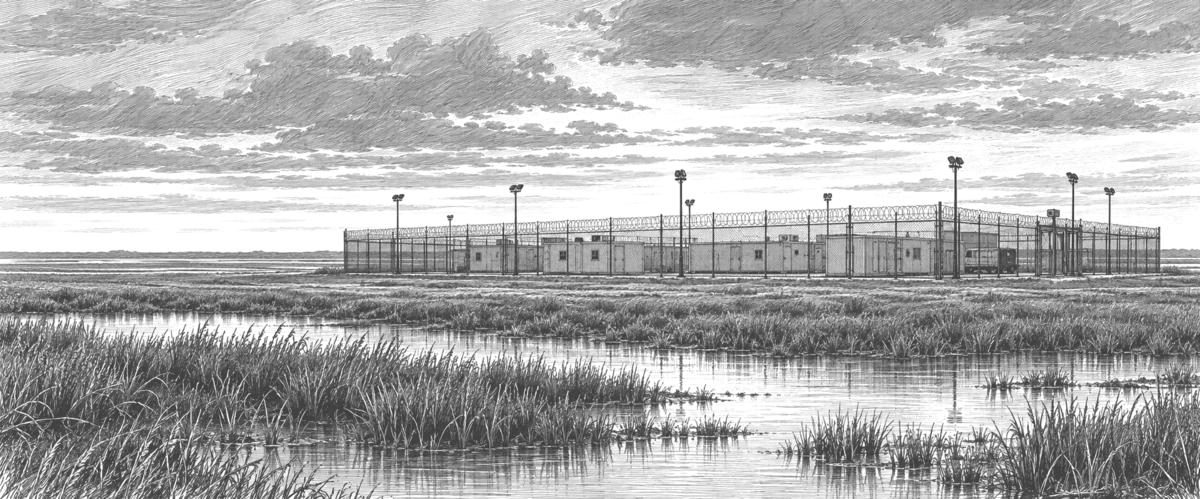
When a powerful actor spends heavily against its own apparent interest, the spending is the message. The Sutherland landlords understood this. Burning paid nothing. It destroyed usable structures and made the estate infamous. But the fire did what the ledger could not, making the clearance irreversible and announcing to everyone still holding a lease exactly whose pleasure their home depended on. The cost was not the price of the policy. The cost was the policy. A demonstration has to be expensive or it demonstrates nothing.
Read the hot clearance the same way, by its effect rather than by any claim about a planner’s mind. Its effect, whatever the intent, is to convert a condition into a favor. To be present, to work, to have built a life over years in a town that needed the work, all of it is shown to be revocable, held not by right but by permission.
The apparatus does not have to remove everyone. It has only to make everyone removable. The family that is not taken still learns, watching the van, the precise worth of the standing it thought it had. That lesson is the output. The rotting fruit is only the receipt.
Here the two letters become one argument. “Cleared for Sheep” held that need was the old basis of standing, that people mattered because the powerful could not do without them, and that when the need thinned the standing thinned with it.
The cold clearance at least obeys that rule. The hot clearance breaks it, because it removes the needed, and in doing so it says something more absolute than the sheep ever did, that need was never really the currency of belonging at all.
One clearance tells the unneeded they no longer count. The other tells the needed they never did. From opposite directions they deliver the same message, that belonging is a favor now, and favors are withdrawn.
The honest objection is real and deserves its due. A nation may decide who enters and who remains, a border that means nothing is not a country, and enforcing immigration law is not, in itself, a clearance.
All of that can be granted without touching the argument, because the argument is not about whether a state may control its border. It is about what it means when removal is aimed at people the society openly relies on, at a cost it openly bears, in a manner built to be seen.
That is not border control doing its quiet work. It is a demonstration, and what it demonstrates is that a person’s place here can be revoked at will. A country that will expel the people it needs by force will have little trouble, later, abandoning the people it does not need by neglect. The hot clearance is not the opposite of the cold one. It is the rehearsal.
So the strawberries rot in Ventura County, and a few states east a data center hums beside a town told, in gentler language, that it is optional. One removal is a fire and the other a frost, but they are the same season, and this country is running both at once, expelling the needed with a van and discarding the unneeded with a valuation, calling the first security and the second growth.
The question the first letter left with a mother at her counter, this one leaves with a picker climbing into a van, and it is the same question. Whether belonging here is still something held by right and by contribution, or something kept, for now, at the pleasure of those who can take it away.
The crofters answered it in the end by making the law need them. The answer was never charity. It was leverage, rebuilt on purpose, by people who refused to be either quietly frosted or loudly burned.
A NOTES ON SOURCES
This essay is a companion to “Cleared for Sheep” and shares its framework, that need has historically been the basis of standing. It advances an interpretation, argued openly rather than asserted as fact, that a removal carried out at net cost functions as a demonstration.
On the Highland Clearances: contemporary accounts of the Sutherland removals of roughly 1814 to 1820 record the burning of cleared townships to prevent return, and the trial and acquittal of the estate factor Patrick Sellar on a charge connected to a death during a clearance. The cleared were largely Gaelic-speaking, and often Catholic or Episcopalian, and improving-era writing frequently cast them as a backward people, so the removals ran along an ethnic, linguistic, and confessional line as well as an economic one. Historians differ on how central that hierarchy was relative to economics, and some figures and details remain debated.
On labor: United States Department of Agriculture and independent analyses report that foreign-born workers make up a majority of the hired farm workforce, with a large share undocumented, and that immigrants fill roughly a quarter or more of meatpacking and a significant share of construction work. Enforcement actions in 2025 and 2026 were followed by documented labor shortages, unharvested crops, and upward pressure on food prices, with credible estimates of a modest reduction in overall output.
On public opinion: multiple independent surveys in late 2025 and early 2026 recorded a marked and sustained rise in disapproval of immigration enforcement. The NPR/PBS News/Marist series found the share of Americans saying the actions of Immigration and Customs Enforcement had gone too far rose from 54 percent in June 2025 to 65 percent by late January 2026, with increases across party lines, while other polling in the same period placed disapproval of the agency near 57 to 60 percent. Notably, general support for deporting people present unlawfully remained comparatively steady, indicating that the public distinguished the goal from the tactics and turned against the latter. Figures vary by pollster and question wording.
On the apparatus: legislation enacted in July 2025 directed on the order of 170 billion dollars over four years to immigration and border enforcement, made Immigration and Customs Enforcement the largest federal law enforcement agency by budget, and allocated roughly 45 billion dollars to new detention facilities operated largely by private contractors. Figures are drawn from congressional and nonpartisan budget analyses and may be revised as spending proceeds.
This letter holds its subject at the level of the state and its apparatus rather than naming individuals, because the argument is about a structure and its effects, not any person’s stated intent.
BONJOURHI! INSTITUTE ANALYTICS · MONTREAL · 2026