
Bonjourhi!
A building can be killed two ways.
You can walk in with a hammer and cut a wall without first learning whether it was holding up the roof. Or you can seal it, lock the west door, send away the masons who arrived with unfamiliar plans, and call the stillness safety.
The first is the risk every gifted renovator eventually runs. The second is the decision every anxious caretaker eventually makes. They look like opposites. One cuts too freely, the other protects too much. But they fail on the same fact, which is that a structure and its future are not two things. The wall is only knowable by where the weight goes, not by how it looks. The building is the promise to keep building it.
Below are two readings of that fact. The first stands inside a house mid-renovation and watches a man who reads walls better than anyone in the room, and asks the one question his skill cannot answer for him. The second stands in a cathedral that was never finished and asks what a nation does when it votes to declare the work done.
One is about the wall you cut. The other is about the door you seal. They are the same building.
I. The Load-Bearing Wall
On Mark Carney, and the difference between the walls you can see and the walls that are holding up the house.
Everyone is still arguing about whether Mark Carney is a good prime minister or a bad one. That is the wrong argument. It assumes he is playing the game the rest of them are playing, defending the same house, competing for the same job. Watch him closely and something else comes into view. He is not trying to win the house. He is quietly deciding which walls are still holding it up, and which ones are just there because nobody ever took them down.
The Wall Nobody Remembers Building
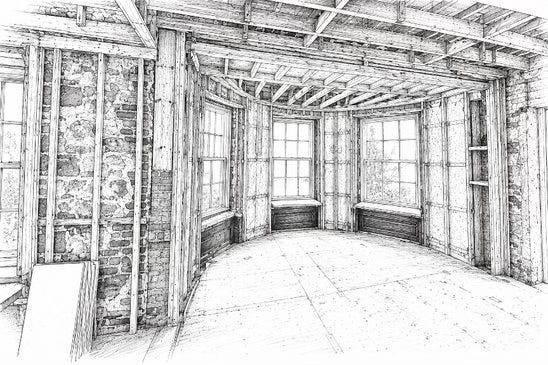
Every house has two kinds of walls. Some carry the weight of the roof. Remove them and the ceiling comes down on you. Others only divide one room from another. They feel permanent because they have always been there, but they carry nothing. A previous owner put them in for a reason that made sense at the time, and every owner since has walked around them without asking why.
From inside a finished house, the two look identical. Same paint, same height, same solidity when you knock. You cannot tell them apart by looking. You have to understand how the weight actually travels, from the roof, through the frame, down to the ground.
Most people who renovate never learn this. They keep the walls they find impressive and knock down the ones that annoy them, and they are often exactly wrong on both counts. A few people read the house differently. They ignore what the walls look like and trace where the weight goes. Then they remove what is holding up nothing, leave standing the parts that matter, and where they have opened space they set a new beam, because they already know what the room is going to become.
That is a rarer skill than demolition. Anyone can swing a hammer.
What Carney Is Actually Reading
Apply that eye to Ottawa and Carney’s year stops looking like a series of unrelated decisions and starts looking like one continuous reading of the frame.
He looked at the consumer carbon price and decided it was a partition. Gone, and nothing fell. He looked at the assumption that Canada’s future must always be built against the United States, decided that wall was rotting from the American side, and started framing a new one toward Europe before the old one gave way. He looked at a public service of nearly 368,000 (and that is the civilian workforce alone, before the military or the RCMP) and asked, wall by wall, which parts carried weight and which were only dividing rooms that no longer needed dividing.
He does the same to ideas that people mistake for structure. That change had to come through Pierre Poilievre. That every province holds a veto over national strategy. That a major project needs a decade of process before a shovel moves. None of these held up the house. They divided rooms, and Carney walked through them like doorways that were never really doors.
The Part Everyone Misses
Here is where his critics lose the thread.
A demolisher stops once the wall is down. The satisfaction is in the removal. Trump is a demolisher, swinging for the dust and the noise, and when he is finished you can often rebuild, because he never touched the frame, only the drywall. Poilievre is louder still, and sanding a wall that has already come loose from the roof.
Carney is the quiet one, and the quiet one is different. Every wall he takes out, he takes out because he has already decided what stands there instead. One Bank at the Bank of England was not a list of cuts. It was a floor plan, and the cuts only made room for it. The Major Projects Office, the pivot to defence, the denser architecture with Europe, these are not empty spaces where institutions used to be. They are new beams, carrying old weight in a different place. By the time the loud men look up, the load is already traveling a path that does not run through them.
That is the difference between a man who dislikes the house and a man who intends to live differently inside it.
The Wall Arguing About Paint
The Conservative Party was, for a decade, load-bearing. It held up the idea that there was another way to run the country. A democracy needs that wall. A house without a second option is not an open floor plan, it is a house with one room.
But a wall carries weight only while it is connected to the frame. Poilievre has spent the year cutting his own loose, sanding it, repainting it, insisting the archway was his idea first. Careful work on something that no longer holds anything up. The party is not being demolished. It is being left standing, upright and irrelevant, while the ceiling it used to carry rests somewhere else now.
Keep Poilievre and that is the choice the party is making. Not defeat. Something quieter and more final. There will be a Conservative Party in name for a while yet. Whether it holds up any part of the house is a separate question, and it is answering it in the wrong direction, one grievance at a time.
The Owner Who Comes Home
Now widen the frame to the largest house on the continent.
America is not renovating. Its owner is swinging at walls for the noise, and the noise convinces everyone, including him, that enormous change is underway. But the frame of the American house, its alliances, its trade, its role as the wall everyone else leaned on, is being rattled, not rebuilt. Washington is making the oldest assumption a homeowner makes: when the work is done, the neighborhood will be exactly where I left it.
While America has been busy inside its own house, the neighbors have been moving beams. Carney builds toward Europe. Europe builds away from dependence on Washington. The middle powers are learning to lean on each other instead of on the one wall that has started to shake.
One day the noise stops. A more conventional owner walks back in and expects the neighborhood that once arranged itself around him. He will find the other houses reframed, the beams pointing elsewhere, the dependence that made him central carried quietly somewhere he was not invited. He was so sure his wall held up the whole street that it never occurred to him the neighbors were building supports of their own.
The Wall The Good Ones Get Wrong
Everything so far has been a compliment disguised as analysis. If that were the whole story, this would be a piece about a gifted man, and Bonjourhi does not write those.
The danger of a man who reads frames this well is not crude error. A clumsy renovator cuts a beam and the ceiling sags that afternoon. You see it. You stop him. The failure announces itself, and the announcement is a kind of protection. The dangerous renovator is the one whose judgment you have learned to trust. He has been right about the vetoes, right about the decade of process, right about a public service grown thick with walls no one could explain. Each correct call earns the next one less scrutiny. Trust compounds, and a man whose trust compounds eventually stands before a wall everyone assumes he has read correctly, because he read all the others correctly.
Return to the one he took down first. The carbon price was a partition, and he was right that it was. Unpopular, dividing the country more than it supported anything in the room people were standing in. Removing it cost nothing and won him the centre. A clean call, by every measure available on the day.
But the load that climate policy carries does not run through any room a frame-reader can stand in and test. It travels through one decades away, holding off a flood that has not arrived, silent by design. Knock on that wall and it answers like a partition, hollow only because the thing it restrains is still in the future. This is the one category the skill cannot see, and the skill is now the problem. A worse prime minister would be stopped here, wrong often enough that no one trusts his hammer. Carney has been right enough that it swings unopposed. Poilievre cannot stop him. The press cannot, because he honors every tradition while answering nothing. The provinces cannot, because he negotiates with the ones he needs and manages the rest. The inspector meant to confirm the beam would hold was taken out too, quietly, as a partition.
The irony is that of all the men who might misjudge this wall, Carney was the one who could not. He built a career on climate finance. He knew exactly what it held off, and cut it anyway, because the room he was standing in rewarded the cut. Which says something uncomfortable about how far even the clearest sight bends toward the weight it can feel today.
The question is not whether he reads the walls correctly. Mostly he does. The question is what happens the one time he is wrong, in a house where he has already removed every wall that used to say so.
Who Carries The Load
There is a second question behind the first, and it is not about eyesight. It is about choice. Some walls Carney does not misread at all. He sees the weight exactly, and then decides which room will carry it.
Look at the deal with China. Tariffs come down on a set of Chinese electric vehicles, and in exchange Canadian canola and seafood get relief in the market that was punishing them. He knew precisely what that wall held up. The Prairies get lighter. Ontario gets heavier. The auto sector absorbs a load so agriculture can set one down. Doug Ford understood it instantly, which is why he was furious. The western premiers understood it too, which is why they were not.
That is a frame read correctly and resolved on purpose. The weight did not disappear. It moved, from one region of the house to another, and the region it landed on was informed rather than consulted. A national renovation is a long series of those decisions. Which province is relieved, which sector absorbs, which room is worth protecting and which can take a little more for the good of the house.
He may be right that the house is stronger for it. A country where every room refuses its share of the weight cannot build anything, and Canada has been that country for a long time. But strength for the house is not the same as fairness to the rooms, and the man setting the beams has told us he does not intend to live in any of them.
What Comes Next
When someone removes a wall in front of you, you see it happen. There is dust, there is a hole where the wall used to be. But a new beam goes in without a sound, and you do not notice it until you realize the roof is being held up by something you never voted for and never saw installed.
Carney has told us he will not live in the house he is rebuilding. He said it plainly about 24 Sussex. He is restoring the structure for whoever comes next, which means the frame he is setting is not for him. It is for them.
So the argument about whether he is good or bad misses the whole thing. Most of the walls he is removing probably should come down. That is not the concern. The concern is that a load-bearing wall and a partition look identical until the day you lean on the one that is gone, and by then the room is already a different shape.
The real question was never whether Carney can read a wall. It is who he has decided should stand under the weight when he moves it, and whether the rooms he is quietly loading will still trust the house once they notice how much of it is resting on them.
II. The Locked Cathedral
Two votes, one instinct, and the long price of decoherence.
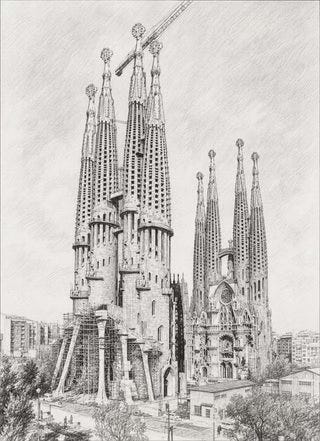
There is a crane over the cathedral in Barcelona, and there has been for longer than anyone reading this has been alive.
It does not trouble the tourists. They photograph the spires and step around the scaffolding, because everyone understands that a great church is a thing still being made, and that the making is the point. You lay a stone for a roof you will not see. It is the oldest arrangement between the living and the unborn, and whole civilizations were organized around it.
Two countries recently voted to break it. They looked at something half-built and decided to call it finished. Britain chose to leave. America chose a man, sent him home, then chose him again. The commentary files these under separate headings and separate causes. They are the same vote, cast by the same instinct, and it is older and stranger than any of the reasons given for it.
The Building That Was Never Done
Walk into Chartres or Cologne and the first feeling is of something eternal, handed down complete from a single confident age.
It is an illusion. No one who began those buildings lived to see them finished. Cologne took six hundred years, laid by men whose great-great-grandchildren would still be arguing about the roof. A Romanesque base carries a Gothic nave under a later spire, each generation adding in the idiom of its own day.
Those first masons knew they were working for strangers. That was the whole arrangement. They cut in shapes the men who finished the work would outgrow, for an interior none of them would enter, because the thing was not an object but a promise between people who would not meet.
Such a building is only finished the day the work stops. And the day the work stops is the day it begins, quietly, to fall.
The Vote to Declare It Done
At some point a caretaker decides the cathedral is complete. No more scaffolding. No more masons in unfamiliar dress proposing chapels he does not recognize. Lock the west door, he says. Protect what we can see.
Both countries cast that vote. Brexit was sold as taking back control. What it took back was the right to stop building. The open channel, the shared market, the arriving labor: these were the next stones, and the vote sent them away. America did the same, twice. Make it like it was. There is the whole instinct in four words. Not greater. Not finished. Just back to the morning a visitor first mistook an unfinished nave for a permanent one.
The Second Law
Here Coherence Economics stops describing and starts naming.
The First Law is that coherence compounds. A cathedral rising is that law made visible: each generation multiplies the work of the last, and a nave is worth more than its stones. Open borders, incoming hands, shared markets are the same compounding. That was the arrangement, and it worked.
The Second Law is that decoherence extracts, and the vote to lock the door is decoherence exactly. Locking the door is not preservation. It is extraction in preservation’s clothes, pulling value out of the shared structure and paying it back as a feeling, now, to people who will not settle the account. The caretaker feels safer the instant the beam drops. That feeling is the toll, and it always looks like protection to the one collecting it, which is what makes it electable.
Who Inherits The Lock
The comfortable version has the young building and the old sealing. In Britain in 2016 it nearly held; the young voted to keep the channel open.
The second American vote refuses that comfort. The young did not hold. Young men in particular crossed over, near enough sixty percent of them, a reversal from four years before. So the morality play collapses, and it should, because decoherence was never a disease of the old. It is available to anyone sold a room he never stood in. The old man at least misremembers something he lived. The young man longs for a nave he never entered, in an age he did not see, described by someone who also missed it. Longing with no memory underneath. A counterfeit of a counterfeit.
And the bill still lands where it always lands, on the ones not yet in the room. This time the door was sealed by young and old together, which is worse: now no one waits outside to lift the latch.
The Lock No One Reopens
There is a fact the architects dislike hearing. Most Britons now call the vote a mistake, and have for years, and nothing happens.
They do not reopen the door, because reopening admits three things at once: that the beam should never have dropped, that the years since were wasted, and that a rejoined thing is not the thing you left. It returns on new terms, at a new price. Easier to look away. What once consumed the nation now barely registers. Not resolved. Avoided.
Regret is not the word for this. Call it resignation, the state after nostalgia collapses and before courage arrives, where most nations quietly settle. America is walking into the same room. The tariffs will raise the price of the thing they were meant to guard. The border will thin the workforce that fills the pews. One morning the caretaker will look around a colder nave and know he did it.
The Third Cathedral
So far the choice looks binary. Keep building, or lock the door. Coherence or its refusal. But there is a third cathedral, and it obeys neither rule.
Stand in Istanbul and look at Hagia Sophia. It went up as the greatest church in the world, held that title for a thousand years, became a mosque in 1453, a museum in the last century, a mosque again in ours. Four buildings, one set of stones. No one finished it and froze it. No one sealed it and walked away. Each age took the structure it was handed and made it carry a new meaning, so that today Christian mosaics look down on a working mosque, some faces plastered over, some uncovered, depending on which century you ask.
It is the oldest of the great houses still in daily use, and this is precisely why. It did not insist on staying what it was. The dome outlived every empire that claimed it, not by resisting them but by letting each one rewrite it.
That is the flaw in the sealing vote, exposed. The vote assumes a structure has one true and final form, and that protection means holding it there. No cathedral has won that bet. The ones that tried to stay fixed are the ruins. The one that let strangers change it, again and again, is still standing, still full, still contested, still alive. Fixity is not preservation. Fixity is the slow death that only looks like safety.
Brexit and MAGA were self-harm of a particular kind: they sealed the door and called it safety. Hagia Sophia never sealed. It let each age impose its meaning, and it paid for that, a cross pried down here, a mosaic plastered over there, but it was never shut, never abandoned, and that is why it outlasted every power that believed it had settled the matter for good.
The Third Law Is Longer
Compounding, extraction, and then the third: recoherence, which reinvests, and which is harder than the other two together.
The asymmetry governs everything. Decoherence is a single vote, a single dropped beam, an afternoon. Recoherence is slow and dear, and here is the part the nostalgic cannot accept: it does not give back the old building. It cannot. Hagia Sophia was not restored to the church it began as, and that is the reason it survived. Recoherence does not rebuild what was. It lets the next age re-mean what stands. Extraction is a moment. Reinvestment is a lifetime, and the lifetime belongs to someone else.
This is what the vote was cast to refuse. Not change to the building, but the surrender of control over what it will come to mean. To keep building is to accept that strangers will finish it in shapes you would not have chosen, and worship in it in ways you would not recognize, and that this is not the loss of the thing but the life of it. Nostalgia is not love of the past. It is the refusal to let the future have its turn.
A nation likes to say it loves its children. What it more often loves is the memory of having been a child itself, and that is the costlier attachment, because the one who holds it never pays for it.
The locking was the mistake. The tragedy is smaller and quieter: a structure held shut against its own future, guarded so carefully that no one is left who remembers how to hand it on. The generations that inherit Hagia Sophia inherit an argument they are still allowed to have. The ones who inherit a sealed door inherit only the door.
BONJOURHI! INSTITUTE ANALYTICS · MONTREAL · 2026