
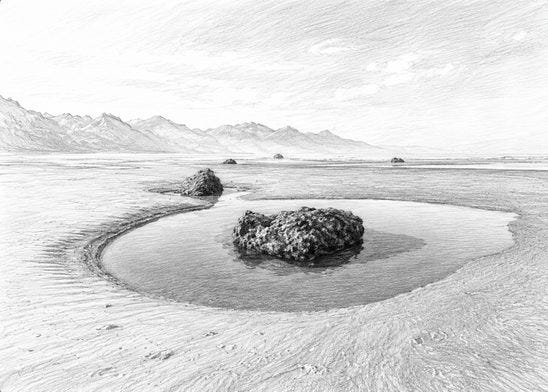
“Les vents me sont moins qu’à vous redoutables.
Je plie, et ne romps pas.The winds are less to be feared by me than by you.
I bend, and do not break.”Jean de La Fontaine, “Le Chêne et le Roseau,” 1668
Issue One: The Jobs That Face the Tide
Bonjourhi!
The ranking is simple enough to state. Eighty jobs, sorted by how much a machine can already do them. At the top of the exposed forty sit translators, historians, writers, sales representatives, customer service agents. At the sheltered end sit dredge operators, roofers, phlebotomists, embalmers. The instinct is to read this as a verdict on intelligence. It is not. It is a reading of exposure. And exposure is not the same thing as value.
The Pool Before The Tide
For two centuries the knowledge worker held a protected position. Not because the work was hard, but because it was coherent in one place. A translator carried a language pair inside one head. A financial adviser carried a client’s trust inside one relationship. A journalist carried a beat inside one set of contacts. The value was not the output. The value was that the output could not easily be separated from the person who made it.
That was the moat, and it held for a long time.
What Changed
The machine did not get smarter than these people. It got closer to the output. It learned to produce the sentence, the summary, the reply, the first draft, without needing the head that used to hold it. The task detached from the person. Once a task can be lifted cleanly off the person who performs it, the task becomes portable. And anything portable can be moved to the cheapest place that will hold it.
The Tide Pool And The Open Shore
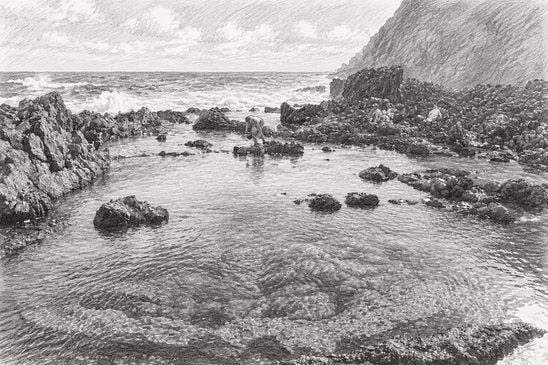
Think of two kinds of creature on a coastline.
The first lives in a tide pool. Warm, still, protected. Everything it needs arrives on schedule. It never had to build much defense, because the pool did the defending. Generations passed in comfort. The creature grew soft, specialized at the one thing the pool rewarded.
The second lives on the open shore. Battered twice a day. Nothing arrives on schedule. It grew a shell, a grip, a way to hold on when the water pulls. It is not more intelligent than the tide pool creature. It is more anchored.
Now the sea level shifts. The tide pool drains. And the soft, specialized creature discovers that its whole advantage was the wall around it, not anything it carried inside.
The exposed forty are tide pool creatures. Their intelligence was never in question. Their shelter was. The work lived in a warm enclosure called scarcity, the scarcity of anyone else who could produce that sentence, that analysis, that reply. The machine drained the pool.
What The List Actually Measures
Read the exposed forty again and one pattern holds. These are jobs where the value was the transmission of information from one head to another. Translate it. Summarize it. Explain it. Sell it. Report it. Advise on it. The coherence lived in the passage between minds, and that passage is exactly what the machine now imitates.
The sheltered forty share the opposite property. The value sits in contact with the physical world at a specific time and place. A roof that leaks now. A vein that must be found on this arm. A body that must be prepared today. The coherence is welded to a location and a moment. It cannot be lifted off and moved.
So the ranking is not intelligence versus muscle. It is detachable versus welded.
The Forty Most Exposed Jobs
Interpreters and Translators
Historians
Passenger Attendants
Sales Representatives of Services
Writers and Authors
Customer Service Representatives
CNC Tool Programmers
Telephone Operators
Ticket Agents and Travel Clerks
Broadcast Announcers and Radio DJs
Brokerage Clerks
Farm and Home Management Educators
Telemarketers
Concierges
Political Scientists
News Analysts, Reporters, Journalists
Mathematicians
Technical Writers
Proofreaders and Copy Markers
Hosts and Hostesses
Editors
Business Teachers, Postsecondary
Public Relations Specialists
Demonstrators and Product Promoters
Advertising Sales Agents
New Accounts Clerks
Statistical Assistants
Counter and Rental Clerks
Data Scientists
Personal Financial Advisers
Archivists
Economics Teachers, Postsecondary
Web Developers
Management Analysts
Geographers
Models
Market Research Analysts
Public Safety Telecommunicators
Switchboard Operators
Library Science Teachers
The Forty Least Exposed Jobs
Phlebotomists
Nursing Assistants
Hazardous Materials Removal Workers
Helpers, Painters and Plasterers
Embalmers
Plant and System Operators, All Other
Oral and Maxillofacial Surgeons
Automotive Glass Installers and Repairers
Ship Engineers
Tire Repairers and Changers
Prosthodontists
Helpers, Production Workers
Highway Maintenance Workers
Medical Equipment Preparers
Packaging and Filling Machine Operators
Machine Feeders and Offbearers
Dishwashers
Cement Masons and Concrete Finishers
Supervisors of Firefighters
Industrial Truck and Tractor Operators
Ophthalmic Medical Technicians
Massage Therapists
Surgical Assistants
Tire Builders
Helpers, Roofers
Gas Compressor and Gas Pumping Station Operators
Roofers
Roustabouts, Oil and Gas
Maids and Housekeeping Cleaners
Paving, Surfacing, and Tamping Equipment Operators
Logging Equipment Operators
Motorboat Operators
Orderlies
Floor Sanders and Finishers
Pile Driver Operators
Rail Track Laying and Maintenance Equipment Operators
Foundry Mold and Coremakers
Water Treatment Plant and System Operators
Bridge and Lock Tenders
Dredge Operators
Source: Bruce Crumley, These 40 Jobs May Be Replaced by AI. These 40 Probably Won’t, Inc., July 31, 2025. Rankings drawn from Microsoft Research analysis of 200,000 Bing Copilot conversations.
Issue Two: The Jobs That Are the Tide
Bonjourhi!
Yesterday we read Microsoft’s list from the exposed side. The translators and the writers and the advisers, the tide pool creatures, watching their wall drain away. Today we turn the list over and read it from the sheltered end. And something uncomfortable appears. The safe jobs are safe for a reason that no one at the top of the list wants to hear.
The Comfort That Is Not Comfort
The forty sheltered jobs are held up as survivors. Phlebotomist, roofer, orderly, dredge operator, embalmer. The framing is reassuring. Learn a trade, touch the physical world, and the machine cannot reach you.
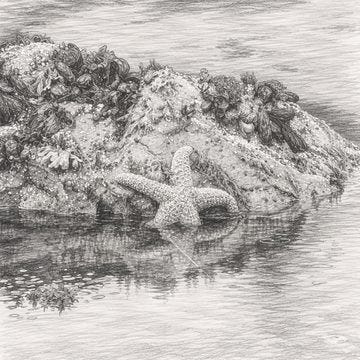
But look at what these jobs have in common beyond their safety. Most of them are hard on the body. Most of them pay below the jobs at the exposed end. Most of them were never protected by scarcity of mind, only by the awkward fact that a body has to be in the room. They are safe the way the open shore is safe. Nothing can drain a pool that was never a pool.
Decoherence Has A Direction
Here is the pattern the two lists reveal together.
The first law says coherence compounds. A protected system, left alone, grows richer and more specialized inside its walls. The knowledge professions did exactly that for two hundred years. They compounded.
The second law says decoherence extracts. When the wall comes down, the value does not vanish evenly. It is pulled out and captured by whoever owns the machine that replaced the wall. The translator’s fluency, built over a life, becomes a line item in someone else’s subscription. The extraction is not random. It flows uphill, toward the platform.
And the jobs that survive survive precisely because there was never much coherence to extract. You cannot pull value out of a job that was always paid at the margin. The dredge operator was never compounding. That is why the machine passes him by. Safety, here, is another word for having never been allowed to accumulate.
The Wall And The Water
So the two lists are one list.
At the top, people who lived behind a wall and mistook the wall for their own strength. At the bottom, people who lived on the open shore and were never given a wall at all.
The machine does not attack the weak. It attacks the sheltered, because shelter is where the accumulated value sits. It walks past the exposed because there is nothing pooled there to take.
This is the turn that neither end of the list is prepared for. The exposed forty are not being punished for lacking skill. They are being punished for having been protected, and for having let the protection stand in for the thing itself. The sheltered forty are not being rewarded for skill either. They are simply too far out in the open to be worth draining.
What Is Left To Do
There is a third law, and it is the only instruction the list contains.
Recoherence reinvests. The value pulled out of the drained pool does not have to disappear. It can be captured back and rebuilt somewhere new, but only by someone who understands that the old wall is gone and will not return. The translator who survives will not be the one who guards the language pair. It will be the one who owns some piece of the machine, or the relationship, or the judgment that the machine still cannot weld to a moment.
The question the Microsoft list poses is not which jobs the machine will take. It is who will own the value once the walls are down. That question was never answered by the ranking. It was only asked.
The Factory That Came After
There is an objection worth taking seriously, because history keeps making it.
Every wave of automation destroyed named jobs and created unnamed ones. The mechanized loom ended hand weaving and built the factory around it. The car ended the stable and the farrier and built the mechanic, the road crew, the roadside town. The spreadsheet was supposed to end bookkeeping, and instead the people working with financial models multiplied, because cheap calculation made new questions worth asking. Each time the destroyed jobs were visible and the created jobs were not, because they did not yet exist to be counted.
The optimist reads the Microsoft list and waits for the factory. It always came before. It will come again.
Where The Water Goes
But notice what made the factory appear. The value freed by cheap cloth was reinvested into new production, and that new production needed hands. The loom drained one pool and dug another, and people could work the new one.
The question this time is not whether value is freed. It is where the freed value pools. If it flows into new work that still needs a person in the room, the factory comes again. If it flows uphill into a platform that runs on almost no one, the water does not refill a pool anyone can work. It gathers somewhere no labor is invited.
This is the third law under strain. Recoherence reinvests, but reinvestment is a choice, not a law of nature. The loom reinvested because the people who captured the value had to hire to use it. A machine that needs no one breaks that link. The value is still freed. It simply no longer has to pass back through human hands to become useful.
So the honest answer to the optimist is neither yes nor no. The factory came after the loom because of how the freed value moved, not because history owes us a factory. The new jobs will come if the value is made to pool where people can reach it. They will not come on their own.
That is the real work the list points to. Not predicting which jobs vanish. Deciding where the water is allowed to gather once the walls are down.
Source: Bruce Crumley, These 40 Jobs May Be Replaced by AI. These 40 Probably Won’t, Inc., July 31, 2025. Rankings drawn from Microsoft Research analysis of 200,000 Bing Copilot conversations.
A closing note. The oak, the reed, and a song.
There is a third voice worth hearing on this fable, and it is not from the seventeenth century.
The oak and the reed sits behind everything in these two issues. La Fontaine settled the argument three centuries ago, that height and pride are pulled out by the roots while the low and pliant give way and endure, and the AI world in front of us is only the newest ground on which that old wisdom is being proven again.
In 2008, on the album L’Expédition, the Québécois band Les Cowboys Fringants set La Fontaine’s oak and reed to music. The song keeps the old shape, the proud tree and the bending stalk, the storm that settles the argument, but it does not stop where the fable stops. It adds a moral of its own, quieter and more modern. Where La Fontaine lets the uprooted oak speak for itself, the song turns to the listener and observes that each of us, alone, cultivates our own certainties, and that we hold them close because they help us survive.
That is a fitting note on which to leave the two essays. The Microsoft list is a field of certainties. The translator was certain of the wall. The adviser was certain of the relationship. The dredge operator never had a wall to be certain of. The storm in the song and the fable is the same force as the tide in these pages, and the same machine in the essays. It does not ask what we believe. It asks only what will bend.
The song is worth seeking out. It carries three hundred and fifty years of the same lesson into a language and a rhythm the reader will recognise, and it lands, as the best of them do, on survival.
BONJOURHI! INSTITUTE ANALYTICS · MONTREAL · 2026