

Bonjourhi!
Every account of the century assumes the ending is already written. China makes the goods. China holds the paper. China runs the surpluses while the West runs the deficits. The math looks settled. But the last time a nation moved into exactly this position, it took the whole prize, and China has not. It holds the ledger without holding the thing the ledger is written in. That gap is not a detail. It is the entire story.
The Precedent Everyone Half-Remembers
Before 1914, the United States was the workshop and the debtor. It borrowed from Europe to lay its rails and build its mills, and it sent its goods outward. Then two wars turned the world upside down. America financed the fighting, sold the munitions, and by 1945 the creditors of the old world owed it billions. The manufacturer had become the banker.
That is the arc China seems to be repeating. The workshop that took Western capital in the 1990s, ran the surpluses in the 2000s, and ended up holding more than a trillion dollars of American debt. The pattern rhymes so cleanly that the conclusion feels automatic.
It is not automatic.
What America Took, And China Has Not
When the United States crossed from debtor to creditor, it took something more than a balance. It took the currency. Sterling stepped down and the dollar stepped up. Contracts, reserves, oil, grain, the plumbing of trade itself, all of it moved into dollars. The banker did not just hold the paper. The banker printed the paper the world agreed to hold.
China holds paper. It does not print the paper anyone wants to hold.
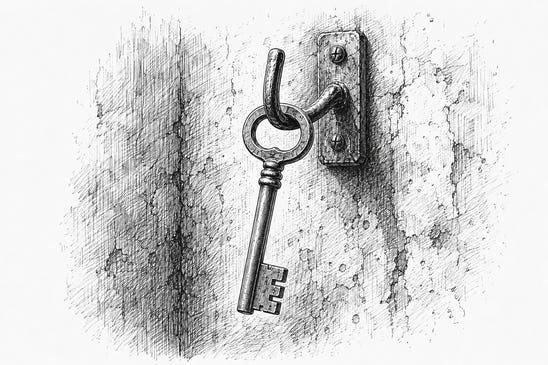
The Reserve Currency As A House Key
Think of a great house with many rooms. You did not build it, but over the years you have paid for much of what fills it. You bought the furniture. You covered the roof and the taxes. On paper you have put more into this house than anyone alive in it. By the logic of the ledger, a good share of it should be yours.
But the deed is not in your name. The house is mortgaged, and the strange thing about this mortgage is that the owner who lives inside wrote its terms himself. He pays you in money he prints in his own basement. He sets his own schedule. When a payment pinches, he can quietly change it. You hold his note. He holds the deed, and the only key to the door.
So you may have paid for half of what stands inside and still not own the house. You cannot lock the door. You cannot sell a single room. And on the night you most need shelter, you cannot be certain the owner will let you in.
That is the position of a creditor who lends in someone else’s money. You can hold the owner’s paper for decades. When the storm comes, the paper is written in his money, honored by his hand, and enforceable only on his terms. You hold the value. You do not hold the key.
And yet his hold is not as firm as it looks. A mortgage written by the owner lasts only while the lenders keep coming to his door, and that is the one thing he cannot command. He lives this way because the world still arrives each morning to lend. Let the lenders begin to doubt him, and they ask for more just to keep the lights on. He can always find the money, because he prints it. What he cannot print is their belief. And the paper he hands them is worth a little less each year he leans on the press. He escapes the higher rent only by thinning, quietly, what every note is worth, theirs and his own.
Now set the metaphor down and name the parts. The owner is the country that issues the world’s currency. You, the one who paid so much and holds only paper, are the creditor nation that lends in it. China. The lenders at the door are everyone who holds the bonds. The key is the currency itself. And after the wars, the owner of the house was the United States, which held the key, lived on borrowed money, and called it ownership. China today holds the paper on a great share of the house. The key still hangs on a hook in Washington.
Why The Key Has Not Changed Hands
A reserve currency is not won by making the most or selling the most. It is granted, slowly, by everyone else. It rests on things China has chosen not to offer. Open capital markets, so money can leave as freely as it arrives. Courts a stranger will trust against their own government. A willingness to run deficits so the world can hold your money in the first place.
China wants the surplus and the reserve status at once. Those two things pull against each other. To supply the world with your currency, you must let it flow out, which means giving up the very control that produced the surplus. Beijing has kept the control. So the renminbi stays a guest in the global system, useful, growing, never trusted with the keys.
But Keys Change Hands
Here is what unsettles the comfortable version. The key is not welded to the wall. Sterling held the world for the better part of a century, and everyone inside that world assumed it always would. It did not.
The dollar itself is the proof. It did not seize the throne in a single afternoon in 1945. The shift began decades earlier, quietly, while Britain was still sure of itself. America out-produced Britain by the 1870s. It became a net creditor around the First World War. And yet sterling stayed the world’s money into the 1920s and limped on into the 1950s, long after the economic ground beneath it had gone. The currency was the last thing to fall, not the first.
That is the pattern worth holding. Reserve status is a lagging indicator. It reflects a balance of power that has already shifted, and it keeps reflecting it for a generation after the shift is complete. Which means the dollar’s dominance today tells you who won the last contest. It does not tell you who is winning the next one.
How A Key Actually Comes Loose
Sterling did not lose the world to a better idea. It lost in a sequence, and the sequence barely varies.
First, the debts outgrow the economy behind them. Britain financed two wars on credit and emerged owing more than it could carry.
Second, the holders of the money begin to doubt. Not all at once. Quietly, at the margins, they start to prefer something else, and the preference spreads.
Third, the issuer confirms the doubt. It inflates, or freezes foreign holdings, or bends the rules when the rules turn inconvenient. Each act teaches the world that the money was always a political instrument, not a neutral one.
That is the anatomy. What it does not tell you is the thing that matters most, how fast the loss arrives, and by whose hand.
Two Ways To Lose A Key
There are two ways to lose a key, and they are not the same.
The first is slow. The hand loosens over years. Debts climb, doubts spread, faith thins at the edges, and one day you notice the key is no longer quite yours, though you cannot say the hour it left. This is how sterling went. No single act, just a long exhale. The holder is almost passive. The world simply stops agreeing, quietly, over a generation.
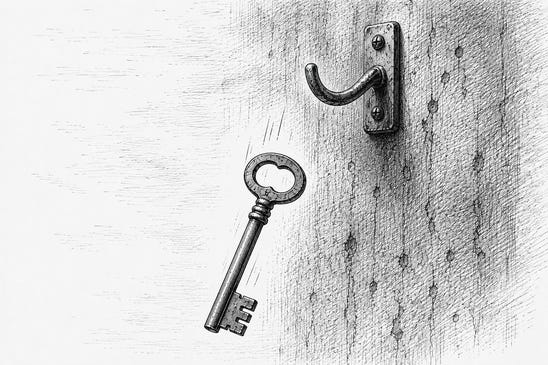
The second is fast, and it is a choice. The key does not slip from the hand. It is thrown. The holder, in a fit of leverage or grievance, decides the key is a weapon rather than a trust, and swings it. Freezes the reserves of an adversary. Threatens the reserves of a friend. Turns the plumbing of world trade into a tool of pressure, tariff by tariff, sanction by sanction, until every nation holding the money is forced to ask a question it had never needed to ask. What happens to my key when I am the one he decides to punish?
The slow loss is a tragedy of drift. The fast loss is an act of will.
What The Throw Teaches
Here is the cruelty of it. The slow loss you can arrest. Drift can be corrected. Faith, thinned, can be thickened again by a decade of steadiness.
The throw teaches something that cannot be untaught. Once the world has watched the key used as a cudgel, once it has seen reserves frozen and access cut and the money turned openly to political ends, the neutrality is gone. And neutrality was the whole basis of the trust. The dollar was held not because anyone loved America but because the dollar was assumed to be above the quarrel, a thing that would clear your trade whether Washington approved of you or not. The moment that assumption breaks, holding dollars becomes a bet on staying in America’s favor. No sovereign wants to make that bet forever.
A government that reaches for its own money as a weapon, that punishes by reflex, that swings the reserve system at enemies and friends alike, is not defending the key. It is teaching the world to build a door that does not need it.
And the throw does more than cost the issuer goodwill. It brings the lenders to the door early. Every swing of the key tells the people who hold the paper what the slow years would have taught them only in time, that the money can be turned against whoever holds it. So they grow wary, and they ask for more to keep lending. What drift would have taken a generation to do, the throw does in a season. The higher cost of borrowing and the thinning of the money were always waiting at the end of the road. The issuer simply runs toward them.
This is the part that should trouble the country that swings. It does so in the name of strength. Freezing the reserves of a rival, punishing a neighbor, reminding the world whose money it is, all of it feels like power. But the very act of showing the power is what makes the lenders nervous, and their nerves are what raise the cost of every future dollar borrowed. The show of strength is the machinery of the weakness. The issuer believes it is aiming the weapon outward. It is tightening it around itself.
There is a second cost, quieter, and closer to home. When the key becomes a weapon, the most valuable thing in the country is no longer a factory or a patent. It is nearness to the hand that swings it. Once the state can freeze one account and spare another, exempt this firm and ruin that one, the surest way to grow rich is not to build something the world wants. It is to know, a day before anyone else, which way the hand will move. Capital notices. It drifts away from the makers and toward the knowers, the ones seated close enough to the decision to trade on it.
So the weapon aimed abroad quietly reorders who prospers at home. It rewards proximity over production. A country that had already begun to forget how to make things, because it could always pay in paper, forgets a second time and more completely, because the real money is no longer in making at all. It is in access. This is the same throw seen from inside the house, and inside the house it corrodes faster than any lender ever could.
Where This Leaves The Century
The slow story asked whether the dollar might drift loose before a successor was ready. That was a question of time and patience.
The throw changes the clock. It does not wait for China to become trustworthy. It does not wait for markets to open or courts to earn faith. It manufactures the demand for an alternative before any good alternative exists, and it does so by the holder’s own hand. The successor is not summoned by China’s readiness. It is summoned by America’s recklessness.
And the world does not need a perfect replacement to begin leaving an unreliable one. It only needs enough doubt, and a few imperfect exits, and time. Gold. Bilateral settlement. Fragmented rails, each clumsy on its own, that together add up to a hedge against a key that might be swung at you next.
The key was never going to fall into China’s hand. That much held. But it does not have to. It only has to be thrown hard enough, often enough, that the world stops reaching for it at all. And a reserve currency that no one is forced to hold is a reserve currency already halfway gone.
The Honest Objection
The strongest case against all of this is that the dollar is not sterling. It sits deeper. The world prices oil in it, settles debts in it, and holds it for want of anywhere better to go, and each of those habits reinforces the others. Sterling never had a moat this wide. The comparison, a skeptic would say, flatters the danger.
The objection is correct, and it changes nothing. A currency this entrenched cannot be pushed out by a rival, because no rival is ready and the habits run too deep. It can only be pushed out by its own issuer. The moat that keeps the dollar safe from China is the same moat that leaves America alone with the power to drain it. Depth is not safety here. It only narrows the list of who can do the damage to one name.
The Privilege And The Poison
So the real accounting is crueler than either story admits, and it falls hardest on the one who seemed to benefit most.
The nation that issues the reserve currency spends a lifetime enjoying a privilege no one else is granted. It borrows in its own money. It runs deficits the world is happy to finance. It buys more than it makes, and the world takes its paper in return and asks few questions. For decades, the issuer lives in the house on borrowed money and calls it ownership. That is the deepest advantage any economy has ever held. It is also the one that quietly rots the thing beneath it.
By design, the one who benefitted most is the one built to lose the most. The privilege and the vulnerability are the same fact seen from two ends. The dollar let America consume without constraint, and in consuming without constraint it hollowed the industrial base, deepened the debts, and grew dependent on a trust it could spend but not manufacture. The surplus nation, denied the privilege, was forced to keep making things. The deficit nation, granted the privilege, was free to stop.
So the question was never whether China would out-produce the West. It did that years ago. And the question was never whether China would seize the key. It cannot, and no one stands ready to catch it if it falls. The question is what happens to the one who held the key too long and used it too freely. The reserve currency was America’s greatest asset and its slowest poison. It was the privilege that built the century, and the design flaw that ends it.
Who Carries The Loss
Follow it to the end. If the key falls and no one is there to catch it, the world does not rush to some new money. It simply keeps a little less of the old money, year after year, while the country that issued it still has bills to pay. The foreign lenders thin out, and the only buyer left for the bonds is the issuer’s own central bank, printing quietly to cover what the world no longer wants to fund. That has a plainer name than economists like to use. It is inflation, slow and steady, built into the system rather than arriving as a crash.
Inflation is not a tax anyone votes for, and it does not touch everyone alike. The government itself is spared, because the debts it owes shrink as prices climb. The ones who own things, land, a business, a building, a shelf of goods, are largely carried along, because what they own is worth more in the cheaper money. The weight falls on the ones who hold the money itself, and the promises written in it. Wages. Pensions. The savings account. The closer a household stands to where the money is made, the drier it stays. The further out it lives, the more of the rain lands on it.
This is not a charge of malice. It is simply how the thing works, and any honest banker would tell you the same. Money thinned to pay a government’s bills quietly carries value from the people who hold it to the people who owe in it and own beyond it. The privilege was shared widely, and for a generation. The bill, when it comes due, is handed to whoever was holding the money, people who were never asked and cannot hand it back.
The Closing Turn
So the frame the piece began with quietly breaks. The whole account was about nations. America and China, the issuer and the challenger, the key and the empty hook. But a currency is not held by a nation. It is held by people, unevenly, and it is lost by them unevenly too.
The money is swung as a weapon abroad. The cost comes home. It lands on the saver, the wage earner, the pensioner, the one who holds the money and cannot flee it, while those who own the land and the buildings and the shares are carried along or lifted higher. A fight that looked like one country against another turns out, when the bill arrives, to be one kind of citizen against another. The quarrel between nations and the quarrel within them were the same quarrel all along, read from two ends.
Inevitably, the trade war becomes a class war. Not by anyone’s design, but by the arithmetic of who holds the money when its value leaks away. That was always the shape beneath the geopolitics. The key on the hook, the key in the air, the slow poison in the paper, all of it was only ever a question of who would carry the loss. And the loss, in the end, does not travel between countries. It travels downward, within them.
Closing Note
There is a way back, though it is longer than any crisis and slower than any crash. The reserve privilege let America stop owing itself, financing its life through the belief of strangers rather than the savings of its own citizens. What was built in 1944, a nation that held its own debt because tens of millions of ordinary people trusted the government on the other side of the bond, was quietly given away in the decades that followed.
A citizen will hold his own government’s paper only if it keeps its value in time and he trusts the courts to honor it, the law to apply evenly to the powerful and the connected, and the tax authority to raise what is owed without fear or favor. Domestic ownership of the debt is downstream of trust in institutions, and trust in institutions is downstream of their fairness.
This is why weaponizing them, at home or abroad, cuts so much deeper than it appears. It does not only frighten foreign creditors. It teaches a nation’s own people that the law is negotiable and the paper only as good as the current favor, which is the very belief a recovery would need to rebuild.
A crash, when it comes, clears the ground rather than only ruining it. In the wreckage the choice becomes visible that the boom concealed. Reflate the same fragile structure, foreign funded and asset inflated and trust eroded, or rebuild on the older foundation, a people who own their own debt and their own currency because they have reason, once more, to trust what stands behind them.
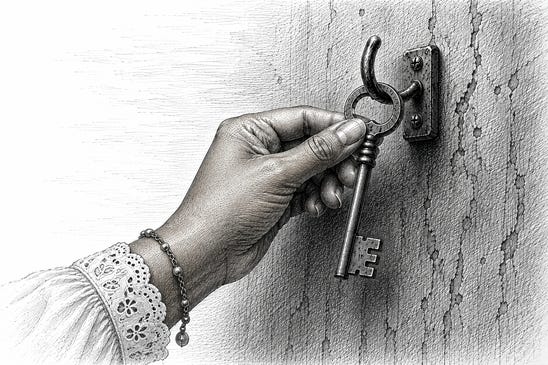
The key comes back to a hand that is the nation’s own, and only a hand that holds its own key can be sure it will never be thrown.
BONJOURHI! INSTITUTE ANALYTICS · MONTREAL · 2026