
Holahi!
There is a reason this series came out of the Holahi campus and not a desk in Frankfurt or a terminal in London.
From inside the machine, the European debt looks like a number to be managed. From the Spanish coast, with one foot in the south that has already lived the adjustment and a clear line of sight to the north that has been quietly paying for it, the same problem looks like something else entirely. Not a number. A promise. A promise made to a growing continent, now being kept by a shrinking one. Once you see it that way, you cannot unsee it, and most of the official conversation starts to look like people staring hard at the shadow while the thing casting it moves out of frame.
That is what Holahi exists to do. Stand far enough from the consensus to see the shape the consensus is too close to notice. This series is the clearest example we have produced of what that distance is worth.
It is called The Reset, Seen From Inside, and it runs in five issues.
We will not print the debt figures. That is deliberate, and it is the first clue. The number is the thing everyone watches, and the number is precisely the thing that has stopped telling the truth. So we set it aside and look underneath it, at the base it is measured against, which on this continent began to shrink before it shrank anywhere else.
Across five parts the series follows one reversal to its end. The base that stopped growing. The quiet tax you are paying without a vote, in the slow thinning of money you were careful with. The currency that cannot fall for one member without falling for all, so the adjustment falls on people instead. The settlement, where a family that called everything ours for a lifetime finally reads the deed and learns the deed says names. And the choice that comes after, the one part of the whole story that was never inevitable.
If you save your money, you are already a character in this story, and not the one you would expect. That is the part the mainstream coverage will never tell you, because the mainstream is written from the farm that draws the most water, not the one that pays for it.
The bang for your euro is simple. By the end you will stop watching the debt and start watching the base, and every European headline for the next decade, every rate decision, every bailout, every fight over shared borrowing, will read differently, because you will see the machinery moving underneath it.
The storm is structural. The morning after is a choice. We wrote this to help you tell the two apart.
The World That Paid For Europe Is Gone
What changed outside the continent, before we turn to what is failing inside it.
The greatest danger to any system is not that its numbers go bad. It is that people stop reading them. A figure everyone watches stays honest, since attention drags the story down to the ground every time it drifts. A figure no one bothers to check can wander as far from the truth as it likes, and nothing pulls it home. The most dangerous moment is not the alarm. It is the silence.
And silence is deceptive, for it has two opposite causes that look exactly alike. People stop checking a number when it is so sound that doubt seems foolish, the way you do not audit a friend. And they stop checking when it has gone so wrong that looking has become unbearable, so they look away on purpose. From the outside the two states are identical. Calm. No warning. No one watching. You cannot tell perfect health from the last hour before the break until the hour arrives.
You have seen this happen to people. The household where money was always simply there, so no one ever learned to read a statement, until the day the account is empty and everyone is astonished. The shop owner who stops reconciling the books the very month cash runs short, when the figure has turned frightening and not looking is easier than looking. The famous young athlete or celebrity who does not once ask his manager a hard question, trusting, busy, flattered, until the money is gone and the trust turns out to have been the whole problem. None of them is lazy. Each is protecting himself from a number, by comfort or by dread, and the not looking is exactly what lets the gap grow unseen. What is true in a kitchen and a back office is true in a treasury. Only the scale changes.
Hold that in mind, for Europe spent a generation not reading four numbers, and all four have now come due at once.
A friend of mine ran a small chemical works near Ludwigshafen. Three generations, good jobs, the kind of firm that quietly held a town together. He closed it last year, and not for any failing of his people at the work. Because the price of the gas that fed his plant tripled and stayed there, and at that price the numbers simply stopped working. He did not relocate. There was nowhere cheaper to go that still felt like home. He just turned off the lights. He had never once, in thirty years, thought to worry about where the gas came from. Nobody had. That was the problem.
My grandfather, whom I never met, was a fisherman in the Magdalen Islands in the Gulf of St. Lawrence, and what I know of him I have only second-hand, from family and from the men who fished with him. He had watched a version of this at sea decades earlier. The cod off his coast were thought to be endless, until distant industrial fleets stripped them in a single generation and the warming water carried what was left far to the north, beyond any local boat. The fishery never truly returned. What struck him, the family always said, was not only that the wealth vanished, but that nobody had been watching the right figure while it did. They counted the money landed at the dock. No one counted the fish still left to breed. We will come back to his cod at the very end of this series, for it carries a warning the four advantages do not. For now it is enough to say he had seen, in his own lifetime, a thing everyone called permanent turn out to be merely unwatched.
Before we look at what is rotting inside Europe, we have to be honest about what has collapsed outside it, since the inside makes no sense without the outside. For the whole life of the single currency, Europe lived well on four advantages that were never European, and no one once watched. Cheap energy. A huge foreign market hungry for its goods. A defense it did not have to pay for. And a world that kept lowering its walls. None was earned on the continent. None was watched, because everyone assumed it was permanent. All four arrived together, held for a generation, and have now left together, inside a single decade.
The Cheap Power
European industry was built on energy bought cheap from a willing seller. Russian pipeline gas was close to half the bloc’s supply before 2022. Then the war came, and within three years that share fell to the low teens, replaced by shipped gas bought on a world market at a world price, fought over cargo by cargo with Asia. Europe did not lose its power. It lost its cheap power, and a steelworks or a chemical plant lives on the gap between what it pays in and what it sells out. Widen that gap for good and the plant does not move. It does what my friend’s did. It closes.
The Hungry Customer
For twenty years China was the customer every European maker wanted, a vast and rising market for the cars and machines and chemicals Europe made better than anyone. The trade had a direction. Europe sold high, China bought, the money flowed home. That direction has flipped. China climbed the ladder it once bought from and builds those cars and machines itself, often better, almost always cheaper. The customer became the competitor. Europe’s goods deficit with China has run near three hundred and sixty billion euros in a single year, exports to China falling while imports rise, Chinese vehicles pressing straight into the trades where Europe used to lead. The market that absorbed the surplus has begun to build the rival to it.
The Free Shield
Through every year of the euro, America carried most of the cost of defending Europe. The shield was real and expensive and mostly paid for in Washington, which let European governments spend on pensions and hospitals what they would otherwise have spent on soldiers. That is being withdrawn. The United States is turning inward and telling Europe to fund its own defense, so a continent that is old and deep in debt must find money for armies out of budgets that were tight before the bill arrived. The peace that quietly paid for the welfare state is being called in, at the worst possible moment to repay it.
The Open Road
The last gift was the open world itself, the long stretch when walls came down and a surplus economy could sell everywhere without friction. That stretch is ending. Europe’s biggest foreign market is raising tariffs, and the same walls raised elsewhere are shoving goods that can no longer cross them into Europe instead, deepening the very deficits it can least afford. The road that carried the surplus to the world is being squeezed at both ends, blocked where Europe wants to sell, flooded where it wants to protect.
Four Losses, One Event
Any one of these alone would be hard. Together they are something else, for they were not four things at all. They were four legs under one table, and the table was a surplus machine. Europe bought energy cheap, turned it into better goods, sold those goods into open and growing markets, and let a defense it did not pay for keep its own spending pointed at prosperity instead of arms. Each leg held up the others. The surplus funded the welfare. The welfare kept the peace at home. The free shield kept the peace abroad. The open road kept the surplus moving. Knock out one leg and the rest might hold. Lose all four in a decade and the table does not wobble. It falls.
This is the difference between a slow illness and a sudden one, and it is the hinge the whole series turns on. The chapters ahead describe the slow kind, a base thinning for forty years, a debt swelling against it, a bargain among unequal partners that worked only while the good years lasted. A slow illness can be carried a very long time. A country can age and borrow and put off the reckoning for decades, as long as the money keeps coming in. What this préambule adds is the end of the money coming in. The surplus machine was the income that paid for all that putting off. It is what let Europe grow old without yet paying for age, borrow without yet settling, promise without yet funding. Take it away and every postponement in the chapters ahead falls due at once, because the thing that paid for the waiting has stopped.
And here we have to be harder than the comfortable story allows, for there is a temptation to call all of this a downturn, a rough patch, a cycle that turns. It is not. Most of what has gone is not coming back on any timeline that helps. Cheap energy will not return, the supply that made it cheap now severed and what replaces it costs more by its nature. China will not return to being the customer it was, having become the competitor instead, and that door swings one way. The demographic charts will not reverse, since the workers who were never born cannot be summoned at fifty, and no policy fills a cradle forty years late. Globalization will not vanish, but its cheap version is finished, because resilience means redundancy and redundancy is a permanent cost, not a passing tax. And the defense budgets falling due are not a single bill but a standing claim on the same strained base, year after year. A cycle is something you wait out. This is not weather that passes. It is the climate the continent now lives in, and the honest word for it is not recession but resettlement, downward, to a base that will hold lower than the one Europe is still budgeting for.
That is why the reset, in these pages, is not a far-off risk or a forecast for some later decade. The weakness inside was always going to force a reckoning in the end. The collapse outside has dragged the end forward into now. The body was already spending its own strength. The conditions that kept it alive have reversed.
And through all of it, the deepest danger is the same one we began with. Not that the numbers are bad, though they are. That so few are still reading them. Every mechanism in the five issues ahead, the thinning base, the quiet tax, the trapped currency, the unread deed, grew in the dark precisely because no one was watching it grow. Each is a number Europe stopped checking. The five issues that follow turn the lights back on, one room at a time, starting with the oldest and slowest failure of all, the one that began long before any of these four advantages departed, and will outlast the argument about every one of them.
Not that the numbers are bad, though they are. That so few are still reading them.
I. The Bottom That Stopped Giving
Why the continent runs out of tomorrow first.
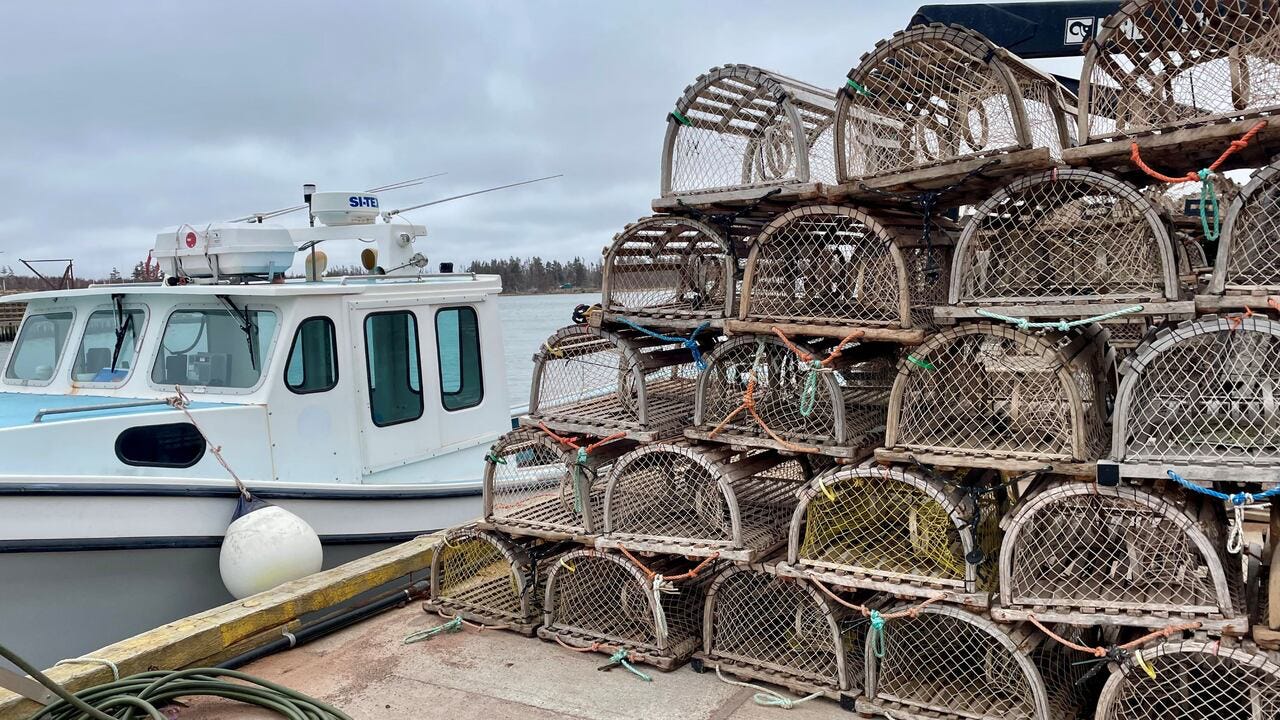
I never knew my grandfather, but the family kept his sayings, and the old men who fished beside him kept the rest. They all told it the same way. He hauled lobster out of a cold bay his whole life and never talked about prices or debt. He talked about the bottom. Whether the grounds were tired. Whether there would be lobster there next year for the boys coming up. He knew what the buyers on the wharf did not, that the figure they paid at the dock meant nothing on its own. It only meant something against what was left on the seabed beneath him.
Europe has forgotten this, and it is about to remember.
Everyone watches the debt. The trillions. The figure so large it has stopped frightening anyone, because a number you cannot picture cannot scare you. But the debt was never the thing to watch. The thing to watch is the stock it is drawn from, and on this continent that stock began to fail before it failed anywhere else.
The Old World
For two generations the arithmetic was simple, and it was kind. Each year there were more workers than the year before. More hands, more catch, a bigger economy to carry whatever you borrowed. A pension promised today would be paid tomorrow by a larger crew of the young. Nobody wrote this down. Nobody had to. It was the water everyone swam in.
So Europe made the most generous promises the world had ever seen, and it was not foolish to do so. A pension that starts early and lasts long. A hospital that asks little at the door. The quiet certainty that the state would be there. Every one of those promises rested on the same faith my grandfather did when he set his pots. That next year the bay would still be full.
The Shift
Then the young stopped coming.
Not all at once. There was no crash, no morning it broke. The births simply fell short, year after year, while the old lived longer and drew on the promise for decades no one had planned for. The crew that was supposed to haul the debt arrived smaller than the debt expected. The figure on the page did not move. The hands meant to lift it thinned underneath.
This is why Europe feels it first. It did not borrow more recklessly than America or anyone else. It simply aged sooner. The promise that tomorrow would be larger ran out here before it ran out anywhere.
The Stock Is The Income
Go back to the bay, because this is the whole of it.
A family fishes the same water for a hundred years. Each season the catch comes in, steady, and they take what they need and a little more, and the little more pays for the boat and the schooling and the long rest of the old. They think the catch comes from their work. It does not. It comes from the breeding stock on the bottom, built up over generations, and every year they lift a little more than the sea returns. You cannot see this happening. A thinning stock still fills the pots, for a while. The hauls come up heavy right until they don’t.
One season the catch is short. A bad year, they say. They make it up by dragging the deep grounds they always left alone, and keeping the small ones they used to throw back, and the next season is short too, and now there is no untouched ground left and few breeders to spawn. The truth they ducked for a century arrives in a single season. The catch was never the income. The stock was the income. And they fished it out.
Europe is that family. The stock is time itself, the working years of a shrinking people. The steady catch is every pension paid and bond redeemed. And the deep ground you finally drag, the undersized ones you stop throwing back, that is debt. The borrowing is not the disease. It is the last untouched bottom. It buys one more season and leaves you one fewer.
The Close
The debt did not grow past Europe. Europe stopped growing under the debt.
That is why the number was always the wrong target for fear. The number is a shadow. The stock is the thing casting it, and the stock has been thinning for forty years while everyone stared at the shadow on the water.
Keep the breeders and call it a living. Or pull the pots, take the lean season, and let the stock come back. Only the last one is a choice. The other two are just slower ways of losing the bay.
When a ground went quiet, the old fishermen said, a man had three choices. Keep dragging it and take less every year until there was nothing. Keep the breeders and call it a living. Or pull the pots, take the lean season, and let the stock come back so there would be something for the boys. Only the last one is a choice. The other two are just slower ways of losing the bay. Europe is fishing a tired ground right now, and it has not yet decided which kind of skipper it is. The next issue is about the ground it dragged first.
II. The Quiet Tax
The saver who never borrowed, paying the borrower’s debt.
There is a woman in Stuttgart who did everything right. She saved. She never borrowed for what she could not afford. She put money aside every month for forty years and asked nothing of anyone. And she is paying, right now, for a debt that is not hers, in a way no one explained to her and no one asked her to approve.
This is how. And it is the quietest robbery in Europe.
A real tax you can see. It has a name and a rate and a date, and you can vote against the government that levies it. That is the honest kind. The kind she pays has no name, no rate, no date, and no government you can throw out, since no one ever stood up and proposed it. It works while she sleeps, on the money she was most careful with.
The Old World
Money set aside used to earn something for the waiting. You lent it to a bank or to the state, and you were paid a little above the rate at which prices rose. Small, but real. It was rent on your patience, and you were the landlord. So ordinary that nobody called it an arrangement. It was just what careful money did.
That world had one condition under it, never spoken. The state had to be able to afford the rent. For most of a century it could.
The Shift
Then the debt outgrew the country, and the rent came due at a size the state could not pay.
A government that cannot outgrow its debt and will not default out loud has one door left, and it is quiet. It does not refuse to pay. Refusing is loud and it ends careers. Instead it pushes the interest rate on its own borrowing below the rate prices are rising, holds it there, and makes sure the bonds get bought anyway. The rent on patience does not vanish. It reverses. The saver stops collecting it and starts paying it.
Economists call this financial repression. The name is too soft for what it does to her.
The Shared Ground
Out past the harbor there was a fishing ground that every boat worked in common, on one unwritten rule. You took what you needed and you left the breeders to spawn, for the ground belonged to all the boats and to next year’s boats too.
The careful skipper kept the rule. He threw the small ones back. He worked his share and no more, and the ground stayed full, and the price of fish stayed steady, and nobody thought about it. The arrangement was invisible the way good weather is invisible. You only notice it when it goes.
Then one boat started keeping everything, the small ones too, hauling at night, taking next year’s stock this season. And here is the cruelty of a shared ground. The cost of that greed did not land on the greedy boat. It landed on the ground itself, on the common stock every boat drew from, so the careful skipper who kept the rule saw his own hauls thin through no fault of his own. He paid for the other man’s appetite, quietly, in a catch that shrank a little each season, in a price that bought a little less. No one handed him a bill. The sea handed it to him.
The shared ground is the euro. The careful skipper is the woman in Stuttgart, and every saver like her in the countries that lived within their means. The boat that keeps everything is the borrower whose debt outran its stock. The thinning common catch is the rate held below the price of patience across the whole currency, so the careful saver covers the greedy borrower, every season, in a sum that lands on no statement and went to no vote. The central bank does not announce it. It just keeps the ground open to all and lets the common stock absorb the difference.
And that is the trap that makes it hold. With his own water and his own rules, the greedy boat would fish itself out and stop, and only that boat would suffer. On the shared ground it never has to stop, since the careful skipper’s restraint keeps the common stock alive enough to keep taking from. Shared, the prudence of the one funds the appetite of the other. The careful skipper pays, and the word for it is solidarity, because no one ever showed him the line where his catch went.
The Close
So who actually pays the European debt, the one that cannot be grown away and will not be defaulted on?
Not the borrower. The borrower is the boat that keeps everything, still hauling. It is the woman in Stuttgart, and every careful household like hers. The pension fund made to hold the bond that pays too little. The family whose savings earn less than their grocery bill climbs. They pay with no name on the tax, no rate, no vote, in the slow thinning of the money they were proudest of.
Repression is the same loss made quiet, taken from the saver instead of declared to the public, stretched thin across a decade so no single year is the year it happened.
A default is loud. It names the loss and assigns it and ends some careers. Repression is the same loss made quiet, taken from the saver instead of declared to the public, stretched thin across a decade so no single year is the year it happened. It is the common ground stripped to cover one boat’s greed, season after season, while everyone calls it solidarity.
But you cannot strip a ground forever. A stock taken faster than it breeds does not last just because the taking is shared. It only picks who goes hungry first. Europe has picked the saver. What it has not picked, only postponed, is the harder question. Not who pays the rent on the debt. Who, among supposed equals, was always going to pay for whom. That is the next issue.
III. The Currency That Cannot Devalue Alone
When the easy exit is walled shut, the people become the adjustment.
In 2010 a nurse in Athens took a pay cut. Then another. Then her pension was cut, and her son could not find work, and he left for Germany. She had done nothing wrong. Her country had borrowed too much, and there was one ordinary escape from that, the road countries had used for centuries, and Greece was not allowed to take it. So the adjustment came out of her instead.
This issue is about the door that was locked, and who pays when it is.
When a country borrows too much in its own money, it has a back door. Not a noble one, but a real one. It lets the currency fall. Imports cost more, but the debt, fixed in that same falling money, gets lighter, and the pain spreads thin across everyone and lands on no one all at once. A country can slip through that door alone, in the dark, and ask no one’s permission.
A country that has adopted the euro does not have that door. It shares its money with eighteen others, and shared money cannot fall for one without falling for all.
The Old World
Before the euro, each nation kept its own measure, and the measure could breathe. Fall behind, and your currency slipped. Your exports got cheaper and found buyers. Your debt, owed at home, quietly shrank against the world. It cost the citizen something, because imports rose, but the blow landed on the money, not the man. The currency fell so the worker would not have to.
It let a country fail softly, a little on everyone, all at once on no one.
The Shift
The euro gathered the currencies and fused them into one, and in good years that was a gift. No exchange lost at every border. No small currency picked off in a crisis. The strength of the whole lent to each part.
But a shared currency has a price you cannot see until the bad year. The country that falls behind can no longer let its money drop. The measure is held in common now, and the others, doing fine, will not move it. So the adjustment that used to fall on the currency has nowhere left to go but into the country itself. Into wages. Into pensions. Into the nurse in Athens.
One Engine, Many Boats
Picture a fleet lashed together for a long crossing, and lashed in a strange way. They do not each run their own engine. They run on one engine, set to one speed, driving every hull at once.
While the seas are even, it is a marvel. They move as one, faster than any could alone. Then one boat starts taking water. On its own it would simply throttle back, ease off the strain, limp at a gentler speed until the crew could bail and patch. It cannot. The engine is shared and set for the whole fleet, so the laboring boat cannot slow its own hull. The speed is not its to choose.
It has one option left, and it is brutal. If the engine will not slow to spare the boat, the boat must take the speed the engine sets. It runs hard with the water rising, seams straining, for slowing is not allowed, and easing off is not possible. The adjustment that should have happened at the throttle happens in the hull instead.
That boat is a country in the euro. The shared engine is the single currency. The speed no one can set alone is the exchange rate, fixed in common, deaf to any one hull’s distress. On its own a struggling country would ease off, let its money fall, and recover gently. Lashed to the others, it cannot. So the strain the currency refuses to take lands on people, as wages slashed and pensions trimmed and the young sent abroad. The country cannot devalue its money, so it devalues its citizens. The clean phrase is internal devaluation. There is nothing clean about it.
Greece lived the whole of it. No drachma left to fall, the engine set in Frankfurt, unmovable for Athens alone. So everything that was not the currency had to give instead. Wages down a quarter and more. Pensions cut and cut again. A generation gone. The one thing built to absorb the shock, the currency, was the one thing that could not move, so the nurse absorbed it for it.
The Close
A national currency lets a country fail quietly and alone. A shared one makes every failure a fleet matter.
That was the trade, and it was not stupid. The euro gave real things, common strength, a market without seams, a money too big to be picked off. But it bricked up the private exit, and changed what failure means. Before, a country in trouble adjusted its money and spared its people what it could. After, it adjusts its people, in the open, while the fleet looks on.
And they do look, since it is their engine too. The laboring boat drags on the whole shared speed, so its trouble becomes everyone’s burden, then everyone’s argument. There is no private failure left. Which forces a question the engine cannot answer. If the strain can no longer fall on the money and falls on the weakest hull, the others must decide whether to take her in tow or cut her loose. That is not about money. It is about who was ever willing to go slow for whom. The next issue.
IV. Who Pays Into Whom
The settlement, and the deed that says names instead of ours.
When a family I once knew settled an old fisherman’s estate, the boat and the licence and the shore lot, three brothers who had called it all theirs together their whole lives sat at a kitchen table and took down the papers. They did not say ours. They said one name. The warmth in that room did not survive the reading. They had meant every word of it. It simply was not what was written down.
Europe is rowing toward that kitchen table, and it does not know it yet.
For seventy years the continent has told a beautiful story about itself. A thousand years of war, and then the choice to be one. One market, one money, one parliament, and behind it all an unspoken promise, that the strong would stand by the weak. The word is solidarity. Europe says it often, and means it.
But a promise meant and a promise funded are not the same, and the difference is about to be read aloud.
The Old World
Solidarity was easy to promise while for years it cost nothing. In good times no money has to move. The strong are strong, the weak are managing, and solidarity is a warm word at a summit, a line in a treaty, a feeling among neighbors all doing well enough. Real, but untested. And an untested promise looks exactly like a generous one, since no one has had to write the cheque, so no one has had to ask how much, from whom, to whom.
That ease had a condition under it, never said. The cheque would never in fact have to be written. For a long run of good years, it never was.
The Shift
Then the weak could not stand alone, and the promise was handed the bill. This is where the first three issues arrive together. The stock stopped giving, so the debt outran it. The quiet tax bought time and stripped the common ground bare. The shared currency locked the exit, so one country’s failure could not stay private and surfaced as the suffering of a people everyone could see. And now solidarity the feeling meets solidarity the cheque, and they were never the same.
The Papers
Three brothers, one boat and one licence, three generations calling it theirs in common. They share the work and the name and the catch. The children grow up sure the whole thing belongs to all of them, no one ever having needed to check. The word ours, said warmly enough for long enough, hardens into a fact in everyone’s mind. Untested, because nothing ever tested it.
Then someone dies, the estate must be settled, and for the first time in three generations a brother takes down the papers and reads what the law will actually enforce.
And the papers cannot say ours. They say names. This name holds the licence, that one only crewed on the boat, this signature owes the loan and that one does not. Everything that felt shared turns out to have been held by particular people in particular amounts the whole time. The brothers were not lying when they said ours. They believed it and built their lives on it. But belief is not signature, and only signatures are enforced. What was ours in feeling was someone’s in fact, and the family had built its whole life on the warm word while the cold document waited in a drawer.
That kitchen table is the European settlement. The boat called ours is the union as it has been told, a common future no one had to itemize while the years were good. The death is the crisis bad enough that the promise can no longer stay a feeling, the moment a member cannot stand and the cheque must be written or refused. The papers are the cold accounting underneath the warm word: whose taxpayer stands behind whose pension, which treasury truly carries which. The union spoke ours for a lifetime. The settlement makes it read the papers, and the papers say names.
This is the gap closing. The story Europe told, one crew, one future, was one thing. The papers, names and amounts and who is actually liable, were another. For decades the space between them was allowed to stand, and an unclosed gap, like an untested promise, can be mistaken for wealth. The settlement is that space slamming shut, and it hurts in exact proportion to how fond and how long the telling was.
The Close
So Europe’s reset will not look like the ones in the textbooks. Not mainly a default or a currency gone overnight. Those belong to a country that can fail alone, owning its boat outright. Europe’s reset is an estate finally settled, and its central act is not a country failing a creditor. It is the family turning to itself and asking the question the warm words were built to delay. Who, among us, was always going to pay for whom.
No answer will please anyone. The strong will find their name on debts they thought were sentiment. The weak will find that ours, once enforced, carries conditions ours, once spoken, did not mention. Both will feel betrayed and neither will be wrong, because both built real lives on a word that meant one thing warm and another thing written.
Papers can be read, and then they can be rewritten. That is the one mercy at the table.
But papers can be read, and then they can be rewritten. That is the one mercy at the table. The brothers can divide the estate in bitterness and part, or sit with the cold document and the warm history both before them and decide, at last, to put names to the promise they only ever spoke. The reading is forced. The rewriting is chosen. Which Europe chooses is the last issue.
V. Tow or Cut Loose
Where the word inevitable goes to die.
After the war, my grandfather’s generation had every reason to rebuild the old hatreds. They had buried sons. Instead they chose, against a thousand years of habit, to build something shared. Nobody made them. The wreckage did not decide it. They did. I keep that in mind whenever someone tells me Europe’s future is already written, because I come from people who proved it isn’t.
This is where the word inevitable goes to die.
Five issues have ended at one place. The stock that stopped giving, the quiet tax, the currency that cannot fall alone, the papers read aloud at last. Each arrived at a reckoning and stopped, on purpose, for what comes next is not a mechanism. It is a decision, and decisions belong to people, not to arithmetic.
The Old World
For seventy years Europe answered every hard question with one word. Later. A shared market now, the fiscal part later. A shared currency now, a shared treasury later. Common parliament now, common debt later. Later let every founding compromise stay half a compromise, a money without the union that would complete it, solidarity in word without the treasury to fund it. The vessel was seaworthy half-built, so it stayed unfinished.
That habit rested on one assumption, never stated. That the day would always be there. The settlement is the discovery that later has arrived, and it is just called now.
The Shift
The settlement takes later off the table, and for the first time the choice has to be made. This is the hinge of everything. All of it up to here was the slow draining of the stock, taking running on until the ground was spent. The settlement is the bottom. And the bottom has one quality nothing above it had. You cannot defer it further, for there is no further down to push it into. The family that has read the papers cannot un-read them. It can only decide what to do from here.
Two Skippers After The Season
Two boats, same harbor, the end of a season that has emptied the grounds for both. Same poor catch, same thin stock, same hard winter coming. Nothing in the empty water tells either man what to do next. The season fell on both alike and then it was done. What happens now is not in the sea. It is in the skippers.
But be clear what the choice is and is not. The sea has changed, not only emptied. The water warmed, the customer turned competitor, the cheap fuel went, the crew shrinks year on year. The grounds will not refill to what they were, so the choice is not recovery against decline. It is how to live on a smaller stock. One skipper pretends the old water will return and wastes away waiting. The other accepts the smaller sea and builds something lean and durable on it. Both live on less. Only one stops pretending.
The first goes out again and fishes exactly as before. Same grounds, same greed, no patience for the lean year that letting the stock breed would cost. He keeps the small ones and drags the deep beds and brings home a catch the first season, thinner but real, and he is relieved. And the stock, taken from again with nothing left to spawn, gives less the next year, and less again, and the boat that survived the season is lost slowly to the recovery. The crueler end, because at first it looked like sense.
The second does the unbearable thing. He ties up through the lean year. He throws back every breeder. He works other water, scrapes by, watches his neighbor land a catch as his own pots sit empty. But out on his grounds the stock steadies and slowly returns, not to the old abundance, that is gone, but to what the changed sea can still hold, while his neighbor’s thins to nothing, and somewhere past the seasons the two boats, identical that empty morning, become opposites. Same season. Same empty water. Two futures. The only difference was the choice each man made when the weather was done and the nets were in his hands.
The empty season is the reset. The bare grounds are the morning the papers are read and the stock is spent, falling on every member alike. The first skipper is the unwind, Europe returning to many currencies and many papers, each nation reclaiming its own measure and its own name on its own debts. A real relief, the quick catch, the end of covering the greedy boat and straining at the common speed. And a slow loss of the thing the union held, the common strength, the seamless market, the weight that made each small country bigger than itself, thinning year over year until the relief shows itself as loss.
The second skipper is union, the half-built vessel finished at last. Fiscal union laid under the monetary one. A common treasury, common debt, the papers rewritten so ours is finally a legal fact and not just a warm word. It means a lean year, then more of them, the strong putting their names to debts they spent a generation calling sentiment, the weak accepting that a funded promise comes with conditions a spoken one did not. It pays nothing quickly. It is the tied-up boat and the thrown-back breeder. Borne, the stock steadies at the level the new sea allows, and the union that comes up is leaner than the old one, but it is real, and it holds.
And that is the point of ending on the water. The season chooses nothing. It empties both grounds the same, then it is spent. Everything that makes the two boats diverge happens after the weather, in the part no season controls. The reset is the season, structural and indifferent, coming or here already. But the morning after is not structural. The morning after is character, and character is chosen.
The Ground That Did Not Come Back
I have made the second skipper sound like the safe choice, and I have to be honest with you, because by every account the old man would never forgive a comfortable lie. Resting the stock is the right choice. It is not a guaranteed one.
My grandfather fished cod as well as lobster. Off our coast they were the great wealth, taken for five hundred years and thought to be endless. Then the factory ships came, vessels that caught and froze and processed at sea, and took in a decade what the small boats had not taken in centuries. The catch climbed and was read as proof the stock was healthy, when the bigger boats were only better at hunting down the last of the fish. By 1992 the breeding stock was near one percent of what it had been. The fishery closed, meant to reopen in two years. More than thirty years later it has barely come back. Tens of thousands lost their living in a single morning, and a way of life five centuries old was over.
And the part my grandfather felt in his own water, that the science only caught up to afterward. The seas warmed. What cod remained drifted north and east, off the old grounds entirely, out to banks no small boat could reach. He used to point at the cold empty bay, they told me, and say the fish were not dead, they were gone, which was worse, because dead things can come back and gone things have moved on without you.
That is the warning under the whole series. Some stocks such as lobster you can rest and rebuild, and Europe still can, on most of what these five issues have measured. But some you wait too long on, and the water itself changes, and they do not return no matter how long you tie up the boat. Resting is the right choice precisely because it is not a certain one. The cod did not wait for Newfoundland to get wise. The grounds Europe has relied on will not wait for Europe to wake up either.
What The Reckoning Offers
Step away from the water, for one thread runs through every issue of this series. Each reckoning we traced was a cost someone chose not to count. The working years not yet paid for. The saver’s erosion, entered on no statement. The risk the currency hid. The promise spoken warmly and never funded. The cheap energy, the easy customer, the borrowed defense, all enjoyed and none written down. The reset is simply the arrival of all the bills run up while the accounts went unread. And the largest unread number of all is the planet, whose energy and climate were drawn down exactly as the stock and the working people were, treated as free since no one was made to enter the price. It was never free. It was only unread.
So the discipline the years ahead demand is not virtue or thrift. It is honest arithmetic. Living within the real base instead of the remembered one, which is a habit of the books, not of the conscience. Failing to add up the figures was once an excuse. Refusing to read them is now a choice, and no longer an available one, because they have arrived whether or not anyone looks.
And here is the part the gloom hides. A lower base is not a lesser life. It is a smaller one, and smaller can be better made. Europe is not staring at ruin. It is standing where a wealthy society rarely gets to stand, free to decide what it is actually for, now that the autopilot that chose for it has switched off. It still holds the deepest pool of skill on earth, the rule of law that capital runs toward when the world turns dangerous, the tools to lift output per worker as not before in living memory, and a settled idea of how to live well rather than merely large.
The opportunity is precise. A Europe that keeps honest books can build what the easy decades never required: a union that funds what it promises, a defense it owns rather than borrows, an energy base it controls, a working population renewed through the young it raises and the newcomers it truly integrates, a productivity gain spread wide enough to lift the whole crew and not only its owners. None of that returns the old abundance. All of it is sturdier, for the easy years stood on supports that were not Europe’s to keep, and this would stand on foundations that are. A people that lives through a real winter learns what a people in permanent summer never does. Done well, Europe does not come out of this poorer in any way that matters. It comes out grown up.
The Close
When the settlement comes, Europe will be told the unwind was inevitable, or the union was, by serious people, in both directions at once. Believe neither. Inevitability is the story power tells to be excused from choosing, and a continent that chose union once and chose deferral once, both within living memory, has no claim to it either way.
The stock, the tax, the currency, the papers, all of that was structure, and structure is real, and these five parts took it seriously. But the morning after the empty season is not structure. It is two skippers on one dead water, and the only thing that has ever told them apart is what each decides when the weather is done and the nets are in his hands.
The reset is the empty season, and the season was always coming. The question is the one the season cannot answer and the family cannot defer.
The reset is not the question. The reset is the empty season, and the season was always coming. The question is the one the season cannot answer and the family cannot defer. The same one my grandfather’s generation answered with wreckage at their feet. Choose well, and choose soon, because the cod did not come back, and no one is owed the time they think they have. Which skipper does Europe decide to be.
A Note on International Philosophy: When the Whistle Never Blows
On comedy, theory, and the system that does not play.
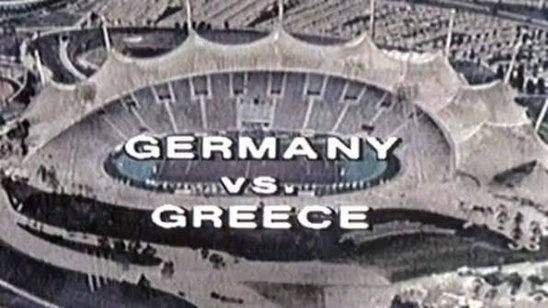
Every so often a piece of comedy turns out to be a piece of theory in disguise. The Monty Python sketch known as the Philosophers’ Football Match is one of these. Two teams of thinkers, Greece against Germany, take the field in Munich. The whistle sounds. Nothing happens. The players wander the pitch, stroking their beards, declaiming their systems, contemplating the deep structure of the game rather than playing it. The ball sits untouched.
This is funnier than it has any right to be, and truer than it means to be.
The sketch dramatizes a failure the Holahi Series keeps returning to. A group can hold enormous talent and still produce nothing, because talent alone does not move the ball. Every philosopher on that field is brilliant. Every one of them is useless. They are twenty-two isolated minds occupying the same rectangle of grass, and their brilliance never once synchronizes into a play. The parts function. The system does not.
BONJOURHI! INSTITUTE ANALYTICS · MONTREAL · 2026