

Bonjourhi!
“Plus ça change, plus c’est la même chose,” he wrote in 1849. The more it changes, the more it stays the same.
Nineteen years ago, a Chinese premier stood in front of his own party and said the quiet part out loud. This week, the numbers confirmed he was right, and that nobody who came after him did anything about it.
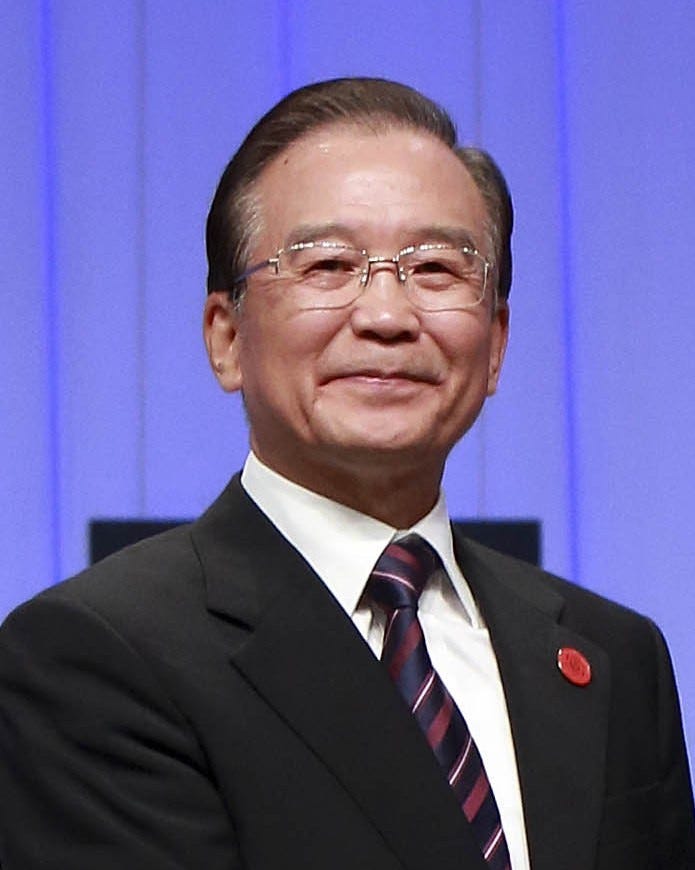
In March 2007, in a meeting room in Beijing, a small group of people watched Premier Wen Jiabao describe his own country’s economy as unstable, unbalanced, uncoordinated, and unsustainable.1 The Chinese officials in the room translating his words audibly gasped. A premier had just said, in public, that the harvest everyone celebrated was not the harvest that fed the household.
That was nineteen years ago. It was treated, at the time, as the beginning of a correction. It was actually the opening line of a much longer story about a granary that keeps getting fuller and a family that never sits down to eat from it.
Here is the number that closes the loop. Household consumption sits at 39.9 percent of Chinese GDP today, against 39.8 percent in 2005, the exact year Wen had in hand when he made his warning. Two decades, three premiers’ worth of promises, a pandemic, a property collapse, and a demographic turn later, the country’s own people are eating almost the same share of what they grow as they were when the alarm was first raised. In May 2026, retail sales fell 0.6 percent year on year, the first monthly decline in three and a half years, following an already weak 0.2 percent gain in April.
Picture a farm family that gets extraordinarily good at growing food. Every year the yield improves. Bigger fields, better equipment, record harvests that neighboring villages can only envy. And every year, the matriarch running the household locks most of it in the granary rather than putting it on the table, because she remembers a lean year decades ago and has never stopped preparing for another one. The surplus does not sit idle. It gets sold, traded, shipped to other villages in exchange for coin, and the coin goes into the same locked room as the grain. The family works harder every season. It eats no better. The neighbors start to notice that an awful lot of what they consume now comes from one farm that never seems hungry and never seems to indulge either.
That is China’s rebalancing problem in one image, and it explains why two decades of leadership promises have not moved the needle. The instinct is not mismanagement. It is fear, specifically precautionary saving, driven by a social safety net thin enough that a single bad year, a medical bill, a lost job, an unfunded retirement, still must be self-insured by the household rather than absorbed by the state. A family that fears the lean year more than it enjoys the good one will keep locking the granary no matter how large the harvest gets. Relaxing some hukou restrictions to let migrant workers carry social insurance with them, which Beijing did this year, is a real crack in the door. It is not the door opening.
The implication that matters outside China is the second half of this story. A household that will not consume forces the country to keep doing what it already does best, building and exporting, because the surplus must go somewhere. China’s share of global manufacturing value added is on a path from around 30 percent today toward an estimated 45 percent by 2030, even as Beijing sets a slower headline growth target of 4.5 to 5 percent. That is not a contradiction. It is the same granary logic applied at the scale of a nation. Growth gets rebadged as export capacity rather than converted into anything the Chinese consumer gets to enjoy, and the rest of the world absorbs a bigger and bigger share of a harvest that was never meant for the people who grew it.
That absorption has a limit, and the world is approaching it audibly. A trading partner can tolerate a farm that undersells everyone once. It gets harder to tolerate a farm that structurally cannot stop overproducing because its own family refuses to eat, year after year, decade after decade. The natural response on the other side of that trade is not patience. It is protectionism, in the United States, increasingly in Europe, and the political logic behind tariffs gets easier to sell to a public every year the imbalance persists rather than corrects.
There is a second granary in this story, and Bonjourhi readers will recognize it from a few issues back. The same government that will not let its households spend is the government that spent nothing from its strategic oil reserve while the rest of the world drew theirs down during the Hormuz crisis and kept adding to it instead. Whether it is a barrel of oil or a yuan of household income, the state’s reflex is to hold, and the rest of the world, and increasingly China’s own middle class, is left standing outside a locked door that has been promised open for nineteen years.
Two granaries, one instinct. Accumulate. Do not release.
Wen Jiabao is not simply forgotten. He has been actively quieted, which is a different and more telling thing. In 2021, long retired and rarely heard from, he tried to speak again, a personal essay about his mother, tracing his family through war and the Cultural Revolution and closing with an appeal for a country built on fairness, humanity, and respect for the individual.2 No mainstream state outlet would touch it, so it ran instead in a small Macau newspaper. Within days, Weibo and WeChat had scrubbed it from the Chinese internet entirely. The same reflex that keeps the granary locked kept his letter from being read at home. It is the same hand, closing the same door, whether what is inside is grain, a household’s savings, or an old man’s memory of his mother.
The four words Wen used to describe his own economy in 2007 still describe it today, which is either a remarkable act of prediction or a remarkable failure of everything that came after it. Probably both.
1. Stephen S. Roach, “China’s Failed Rebalancing,” Project Syndicate, June 26, 2026.
2. Viola Zhou and Alan Wong, “China’s Ex-Leader Seems to Have Published a Rare Column. Now It’s Censored,” World News, April 19, 2021.
The granary is a nation’s ledger. What follows is the same locked door, the same instinct to hold rather than spend, drawn at the size of one family’s kitchen table.
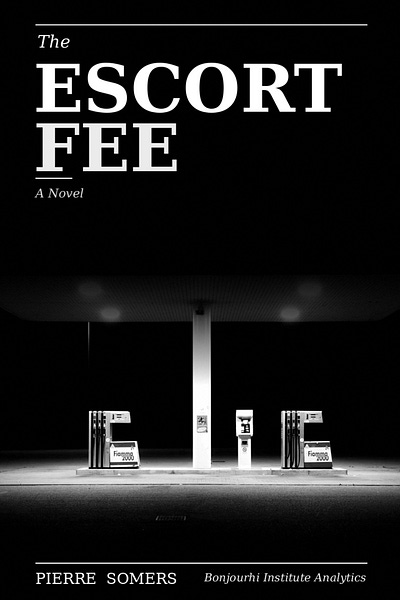
The Escort Fee
Bonjourhi,
You’ve spent some time with the argument from an altitude, in The Escort Fee — A Complete Analytical Work in Three Parts.
The attached novel presents the same argument, from the kitchen table.
Dale Briggs has worked a West Texas compression station for twenty-eight years. He has driven past the flare stack every day without asking why it burns. His wife Leanne did the arithmetic thirty years before he did and never told him. Their daughter Emma understood the platform layer before her father understood the molecular layer.
The novel follows them from 1992 to 2027. One family. One architecture. No alternative route.
He had been paying this his whole life and calling it the price of gasoline.
BONJOURHI! INSTITUTE ANALYTICS · MONTREAL · 2026