
Bonjourhi!
The old line says plus ça change, plus c’est la même chose. The more things change, the more they stay the same. This week Rome gave us the mirror version: Moins ça change, plus c’est la même chose — the less something changes, the more it stays exactly what it always was.
It is what the French would call “Une vérité de La Palice,” or a Lapalissade.*

For thirty-eight years, Rome treated its rupture with the Society of St. Pius X as something slowly healing. Nothing healed. It just sat there, unchanged, until this week, when the Vatican finally admitted what had not moved since 1988.
Below, why the gesture that was supposed to fix things in 2009 only delayed the reckoning, why the Germanic mindset theory does not survive contact with the facts, and why this schism runs the Reformation backward rather than repeating it.
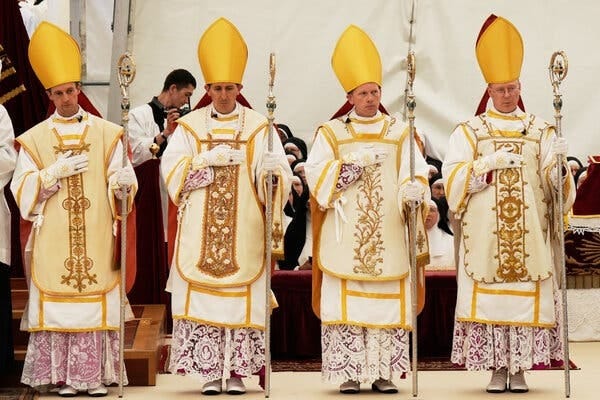
This week, the Vatican excommunicated the clergy of the Society of St. Pius X and told its lay followers to leave the group or face the same censure, after the traditionalist society defied Pope Leo XIV and consecrated four new bishops without his approval at a ceremony in Switzerland that drew roughly 17,000 people. According to the New York Times, church historians describe it as the largest rupture inside the Catholic Church in more than a century and a half, with the society’s followers estimated between 300,000 and 600,000 worldwide.
If you would like to read the full article, you can do so via this link: “Vatican Excommunicates Breakaway Group, in Biggest Schism in 156 Years,” The New York Times, July 2, 2026. Please note that access via this link is only possible until the end of July 2026.
* Lapalissade: a comical truism. The coinage originates from La Palice’s epitaph, which reads “Ci-gît le Seigneur de La Palice: s’il n’était pas mort, il ferait encore envie” (“Here lies the Seigneur de La Palice: if he weren’t dead, he would still be envied”) — words later misread, accidentally or intentionally, as “S’il n’était pas mort il serait encore en vie” (“If he weren’t dead he would still be alive”).
The Fault Line Rome Stopped Ignoring
The ground does not move gradually. It holds still for decades, then opens all at once.
A bishop stands in a field in Switzerland, wearing gold and white, hand on his chest, defying a pope who asked him personally not to. Seventeen thousand people came to watch. By Thursday, Rome had excommunicated seven hundred and fifty priests and told hundreds of thousands of lay Catholics they had a choice to make. This is not a skirmish. It is the largest rupture inside the Catholic Church in a century and a half.
The strange part is not that the rupture happened. The strange part is that it took thirty-eight years to become final.
In 1988, Marcel Lefebvre consecrated four bishops without Rome’s permission and was excommunicated within days. In 2009, Pope Benedict XVI lifted that excommunication as a gesture toward the traditionalists still attached to the old Latin Mass. For seventeen years, Rome and the Society of St. Pius X lived in a strange half marriage. Not reconciled. Not fully separated either.
That half marriage is now over.
Think about a fault line, the kind under California. Two plates are not smoothly sliding past each other. They are locked, friction holding them still, while stress accumulates underneath for decades. Sometimes the fault releases a little of that stress quietly, in small tremors nobody notices. Engineers call this creep. It looks like relief. It is not. It only delays the release of energy that has nowhere else to go.
Then, eventually, the whole segment goes at once. Not a tremor. A rupture.
Benedict’s 2009 gesture was creep, not resolution. It relieved a little pressure on the surface, lifting sanctions on five men, without touching the deeper disagreement underneath: whether the Second Vatican Council’s changes, vernacular Mass, ecumenical dialogue, a more modern posture toward the world, were legitimate developments of the faith or a betrayal of it. That disagreement never moved. It just sat there, locked, while both sides told themselves the crack was healing.
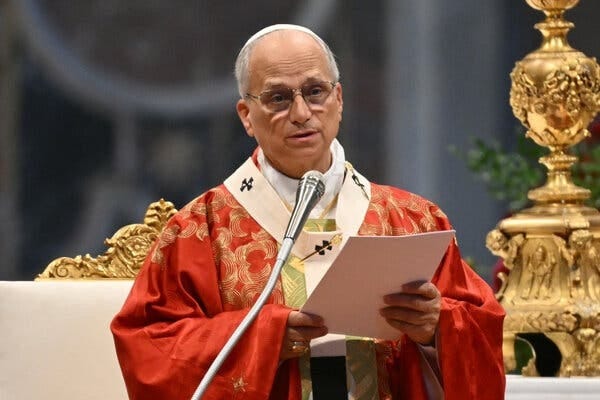
Leo XIV inherited a fault line his predecessors had spent decades quietly not looking at. When the Society consecrated four more bishops this week, in the same village where it built its first seminary in 1970, Leo did not manage the moment. He let the whole segment go. Full excommunication of the clergy, sacraments declared invalid, followers told plainly to leave or be treated as schismatic. A professor of theology called it full clarity after 2009’s ambiguity. That is precisely what a rupture gives you that creep never can.
Now to the two questions underneath the news story.
Is there a Germanic mindset at work here. The instinct to look for one is understandable, doctrinal rigidity, resistance to Rome, a certain flavor of stubbornness. But the facts do not cooperate. Lefebvre was French. The seminary is in French speaking Switzerland. The bishop who denied the Holocaust in 2009 was British. The Society today has its strongest numbers in France, the United States, and Latin America, not Germany. This is not an ethnic or national story. It is an institutional one, and institutions do not need a nationality to produce rigidity. They only need an identity built on defiance of external authority.
That is also the answer to why a Catholic bishop found his way to Holocaust denial. It was not Catholic doctrine that got him there. It was the shape of the movement itself. A group whose founding identity is refusing to accept what the mainstream hierarchy tells it to believe, about the Mass, about ecumenism, about the Council, builds a kind of internal muscle memory for rejecting consensus. That muscle does not know to stop at the edge of liturgy. Once an institution trains its members to treat outside correction as suspect by default, it has no internal mechanism left to say this particular rejection has gone somewhere the founders never intended.
Now Luther and Calvin. The instinct to reach for that parallel is right, but the mechanics run backward. Luther and Calvin ruptured with Rome because they wanted the Church to change and Rome would not move fast enough. Lefebvre’s heirs ruptured with Rome because the Church changed and they wanted it to stop. Same fault line, same mechanism of accumulated pressure finally releasing in a formal break, but the plates are moving in opposite directions. The Reformation was a rupture toward the future. This one is a rupture toward the past. Both prove the same thing: a church that manages disagreement through ambiguity rather than resolution is not preventing rupture. It is only choosing when the rupture happens and who is standing on which side of it when it does.
Rome did not create a new problem this week. It stopped pretending an old one was smaller than it was.
Institutions can manage a disagreement through ambiguity for decades, right up until the moment they can’t. Money runs the same trick, quietly claiming a backing it no longer fully has. What follows turns that same question — the distance between what a thing claims and what actually stands behind it — onto the money in your pocket.
BONJOURHI! INSTITUTE ANALYTICS · MONTREAL · 2026