

The First Law of Coherence Economics.
Coherence is purchased, never given.
Its dynamic is compounding. A trustworthy number, a kept promise, a price that tracks value — each lowers the cost of the next transaction, so what is held in place earns, and eventually pays for its own upkeep.
Executive Brief
The Argument In One Line
Revolutions built on a transcendent idea tend to end the same way: when the founding faith stops persuading, the institution that enforces loyalty takes the place the prophets once held, and the soldier replaces the prophet. But the pattern is not fate. These two essays examine the societies that escaped it, and find that escape is always the same act, paying to keep coherence alive by some means other than force.
Why These Two Pieces Belong Together
The original essays showed the pattern succeeding, ending on the one case, the United States, that escaped. These two companions are the positive study of escape. One shows a country that escaped by never buying an expensive creed in the first place. The other surveys the revolutions that escaped by paying, in time, to renew or rewrite the creed they had. Read together, they map the full range of ways a society keeps the soldier out of the chair, and the price each way demands.
Essay One: The Soldier Who Made A Deal With The Prophet
Canada is the country that escaped by arrangement rather than creed. The founding move was made by the conqueror: having taken New France by force in 1759, Britain chose in 1774 to rent the Catholic Church rather than crush it, governing through the faith because a contented Church was the cheapest way to hold a territory it could not assimilate. That single decision set the national reflex, accommodation over conquest, the contract over the revelation, and it is why Canada never had a revolution. There was no single creed to seize, only an arrangement to renegotiate.
The price. Cheap coherence freezes. The rented Church governed Quebec for two centuries and held it still, the era later named the great darkness.
The payment. The Quiet Revolution of the 1960s is the one Canadian revolution, the soldier-and-prophet substitution performed without a soldier: the Quebec state retired the Church and built a secular nation by ballot and civil service. Recoherence, paid deliberately.
The live test. The essay closes on Alberta’s October 2026 referendum, where separation talk is leverage rather than nation-building, cheap coherence pressing on the bargain, with support falling as the real price comes into view.
Essay Two: When the Soldier Does Not Come
The companion surveys five revolutions that defied the pattern, grouped by the kind of escape:
Chile, the reversal. Pinochet seized the chair by force in 1973, then installed a new creed rather than demoting an old one, the soldier as prophet. The cycle ran anyway, and in 1988 the regime surrendered power by its own rules, though it left a frozen constitution behind as the price of exit.
Spain and Poland, the negotiated exits. Spain’s apparatus wrote itself out, the dictator’s own heir handing the country a democracy. Poland’s state was out-cohered by a counter-faith, Solidarity and the Church, and negotiated its own departure. The soldier comes for an empty chair; fill it and there is nothing to take.
South Africa, the rewrite. The founding creed was not defended to the last nor merely surrendered but deliberately replaced with a broader one, recoherence in its fullest form, the living-memory echo of the American Civil War.
Saudi Arabia and India, the controls. Where faith and state were fused at the founding, there is nothing to substitute and the pattern never starts. Where strong civilian institutions were built, as in India beside Pakistan, the soldier is kept subordinate. The cycle needs a separable faith and state, and is escapable by construction.
The Conclusion Both Essays Share
The escapes are not exceptions but a single move in different keys. Canada never bought an expensive creed; Quebec, Chile, and South Africa paid to renew or rewrite one; Spain and Poland negotiated the old one out; India built the institutions that made the question moot. In every case the soldier stayed out because something was paid to keep coherence alive by means other than force. This is the First Law of Coherence Economics stated in history: coherence is purchased, never given. The soldier takes the chair when no one is willing to pay. He stays away when someone pays in time.
Method
Both essays are outputs of the Translation Machine, the Institute’s diagnostic framework, applied this time to revolutionary states rather than to markets and institutions. The Machine reads a system through four overlays and scores its decoherence signatures, distinguishing what a state generates now from what it draws down from accumulated stock. The pattern of the soldier replacing the prophet is decoherence made visible; the escapes are recoherence, a society reinvesting in its organizing idea before the old one rots to the point where only coercion can hold it.
Essay One: The Soldier Who Made a Deal with the Prophet
How a conquest became a country by negotiation, and why Canada is so close to America yet so unlike it.
Bonjourhi!
Two countries share the longest border in the world, a language, a market, and most of a continent. One of them was born in a revolution that still defines it, a creed seized by force and held aloft ever since. The other was born without a revolution at all, and has spent its whole life faintly embarrassed about that.
Canadians tend to apologize for the difference. No founding war, no self-evident truths, no document that makes the hair stand up. Just a slow administrative assembly of a country, more merger than uprising. Next to the American story it can feel like a country that never quite happened.
That reading misses what actually happened. Canada did not fail to have a revolution. It chose, at the very start, a different way of buying the thing a revolution is supposed to buy. And the decision that set the tone was made not by Canadians at all, but by the empire that had just conquered them.
The Deal That Founded A Country
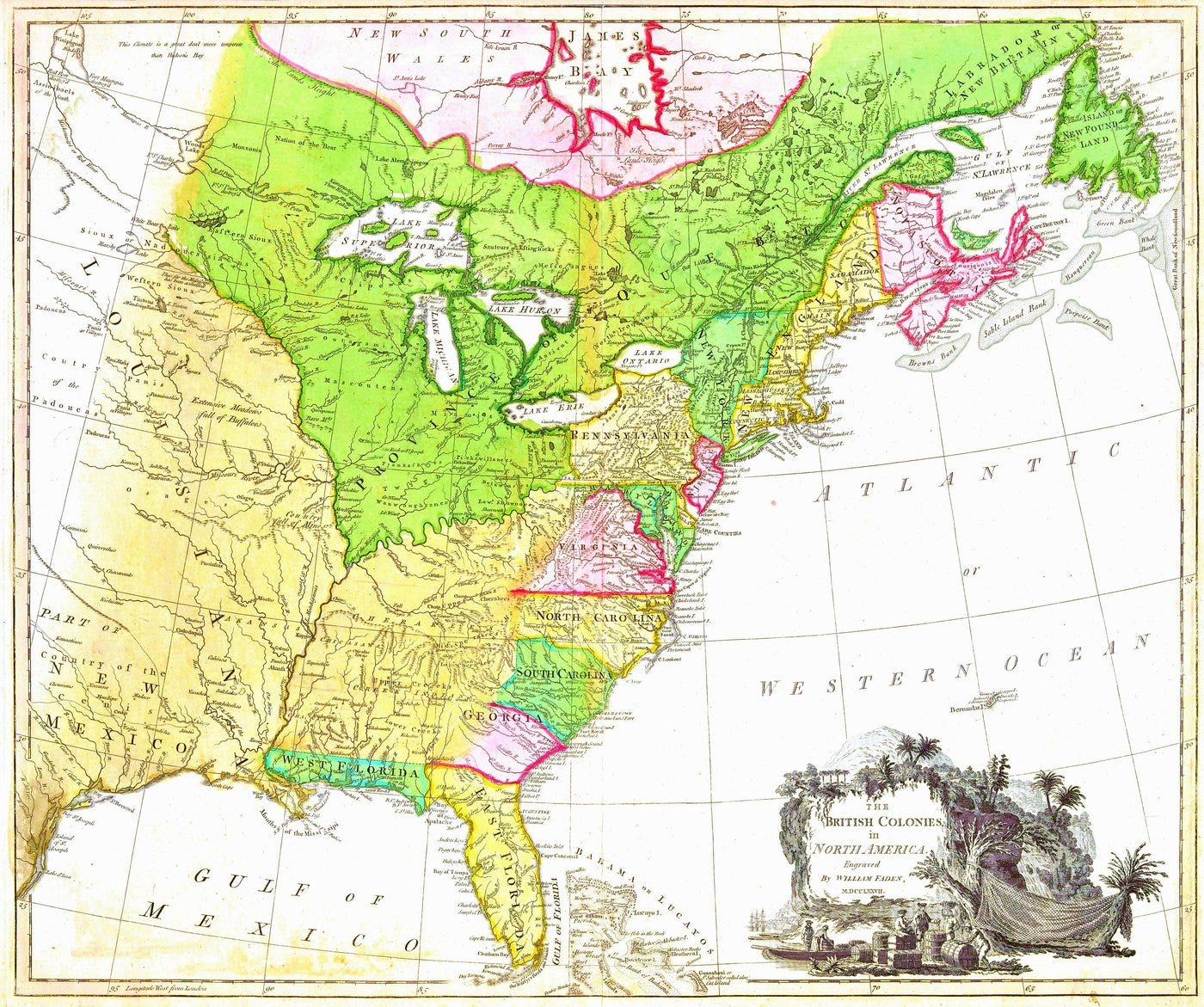
In 1759 Britain took New France by force. By every logic of the age, what should have followed was assimilation. A Catholic, French-speaking population brought to heel under a Protestant English crown, its faith barely tolerated, its institutions replaced.
That is not what happened. In 1774, with royal assent, Britain passed the Quebec Act, the first constitution of what would become Canada. It guaranteed the free practice of the Catholic faith. It restored the right of the Church to collect the tithe. It kept French civil law and the seigneurial system in place. The conqueror did not install its own creed over the conquered. It left the old one standing, and governed through it.
The motive was not generosity. It was a matter of calculation. Britain could not populate or assimilate the St. Lawrence valley, and a revolt was brewing to the south. A contented Church was the cheapest garrison available. Leave the priests their powers, and the priests would keep the people loyal, or at least quiet. The empire bought stability not with soldiers but with a Concordat*.
Set this beside the soldier and the prophet, and notice that it runs exactly backward. Elsewhere a conquering state demotes a transcendent faith and installs the nation in its place, by force. Here the conquering state propped the faith up, on purpose, because a living Church was the most efficient way to hold a territory it did not otherwise know how to keep.
The Church delivered. With immigration flowing overwhelmingly to the English-speaking side, the one way a conquered people could refuse to disappear was by sheer numbers, and the Church made fertility a duty, sacred and national at once. The strategy had a name, la revanche des berceaux, the revenge of the cradles. A people that could not reverse the Conquest could at least out-populate it.
Arrangement, Not Creed
That single decision set the national reflex, and the reflex was accommodation.
Where America was built on one idea that everyone was meant to share, Canada was built on a bargain between people who did not share an idea and agreed not to force the matter. Two faiths. Two legal traditions. Two languages. Held together not by a self-evident truth but by a negotiated settlement that asked no one to convert.
Confederation in 1867 was the same move, scaled up. Not a people declaring itself, but provinces striking a deal, with the French fact and the Catholic fact written into the terms rather than dissolved by them. Canada is the Quebec Act repeated: the arrangement preferred to the creed, every time the choice came up.
This is why there was no revolution†. A revolution seizes a single transcendent idea and dies defending it. Canada never had the single idea to seize. It had a contract, and you do not storm the gates over a contract. You renegotiate it.
The Price Of Cheap Coherence
Every arrangement has a cost, and Quebec paid it for two centuries.
The deal that kept the Church standing also kept it in charge. With the state’s blessing and the state’s interest, the Church governed the things that matter most: birth, school, hospital, marriage, the boundaries of belonging. Quebec became the most clerical society in North America, not in spite of the conquest but because of it. The conqueror had found a pious, obedient order convenient.
The result was a society held in place. They later named the era la grande noirceur, the great darkness. Rural, devout, and watched, while the rest of the continent industrialized and moved. The seigneurial system, the relic of 1774, did not fully expire until the early 1970s.
This is what cheap coherence buys, and what it costs. Britain purchased two centuries of order by renting an existing faith rather than building a new one. But a rented faith freezes the tenant. The thing that kept Quebec stable also kept it still.
La Révolution Tranquille
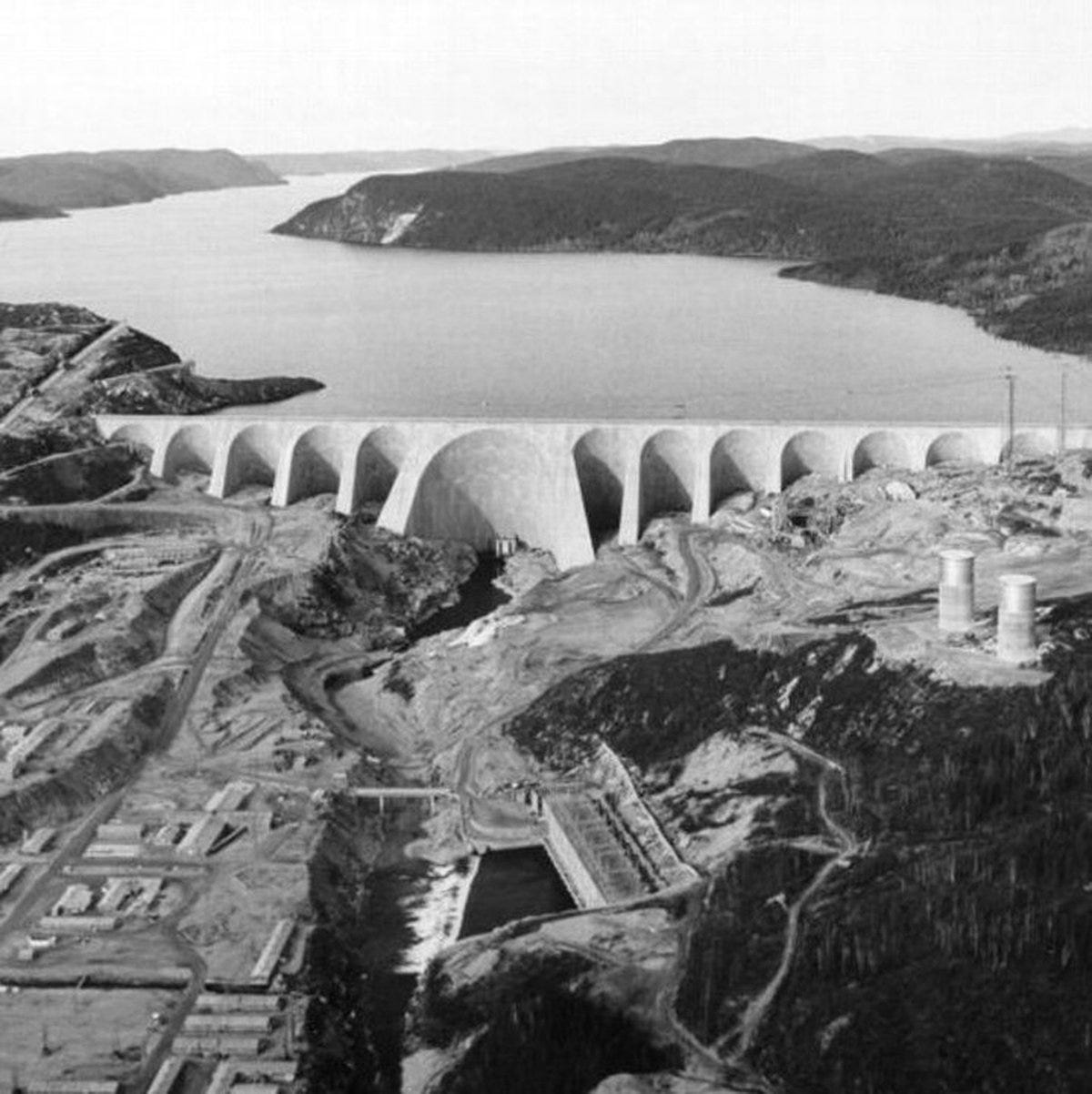
Then, in a single decade, Quebec did what the founding deal had prevented for two hundred years. It is the only revolution in Canadian history, and it was so calm they named it for its quietness.
Beginning with the 1960 election, under the slogan maîtres chez nous, masters in our own house, the Quebec state took back everything the Church had held under the old bargain. Hospital insurance in 1961. The nationalization of electricity into Hydro-Quebec in 1962. A Department of Education in 1964, ending the Church’s grip on the schools. The Caisse de dépôt in 1965 to hold the province’s new savings. In ten years the institutions that the deal of 1774 had handed to the Church were handed back to the state.
Here is the reckoning. The transcendent claim, the Church, demoted. A national claim, the Quebec nation, installed in its place. The faith left standing on the wall while the state took the room. It is the same substitution that elsewhere arrives with soldiers and purges. Quebec did it with a ballot and a civil service‡. The prophet was not replaced by the general. He was replaced by the schoolteacher and the bureaucrat.
And here is the proof that the substitution was real and not cosmetic. The revenge of the cradles, the enormous family the faith had commanded for two centuries, collapsed within a single generation, from among the highest birth rates in the Western world to among the lowest. A people that had reproduced itself as a sacred duty stopped almost the instant the duty was secularized. The faith had been retired, not reformed. Quebec would pay its survival from now on in institutions, a state, a treasury, and before long a law to protect the language.
The tenant became the landlord. The faith Britain had rented, to hold the colony cheaply, was finally given notice by the Quebec state itself.
Two Ways To Buy A Country
Stand the three cases together and the close-yet-different puzzle resolves.
America bought its coherence dear. A revolution, a creed, blood paid up front, and a long bill ever since to defend the purchase against decay. It is loud, it is stirring, and it is expensive to maintain. The soul-stirring myth and the permanent strain are the same coin.
Canada bought its coherence cheap. No creed, only an arrangement, renewed in small installments and never paid for all at once. It is calm, it is durable, and it is faintly soulless. The absence of a founding war and the absence of a founding myth are, again, the same coin.
Quebec is the one place that did both. It rented for two centuries, then paid dear once, quietly, in the span of a decade. It is the rarest case of all, a society that let a frozen coherence run almost to the end, then chose to reinvest in a new organizing idea rather than wait for the old one to rot until only force could hold it. That choice has a name in our research framework. It is recoherence, the only move in the whole system that requires a society to decide, deliberately, to pay again.
The Closing Turn
Which brings us, in the autumn of 2026, to Alberta.
On the nineteenth of October, Albertans will vote in a referendum that puts separation on the ballot. The grievance behind it is real. A province sitting on the most abundant resources on the continent, landlocked, selling to a single buyer, governed in matters of energy by a distant capital it did not elect and does not trust. The language is the old Canadian language, sharpened. A fair deal. Sovereignty within a united Canada. The arrangement, renegotiated under threat.
Run it through the same frame and something becomes clear. The premier driving the sovereignty vote says she will campaign to stay. A wide majority of Albertans intend to remain, near three in four on the actual question, and the support for leaving is not holding but falling, down by a third in a matter of months as the vote draws closer. This is not a country being born. It is leverage, the oldest Canadian move there is, the contract reopened to extract better terms. It is the reflex of cheap coherence, pressing on the bargain rather than building something to replace it.
And notice when the support drains. It falls as the question moves from grievance to construction. Asked whether Alberta has been wronged, many will say yes. Asked whether they will pay the price of actually leaving and building something new, the numbers collapse. Grievance is cheap and a country is dear, and the closer the vote comes to that price, the fewer are willing to pay it. The polling is not measuring a nation deciding to be born. It is measuring an exit being reconsidered as its cost comes into view.
And here is the distinction the framework refuses to blur. Quebec did not threaten its way to relevance. It built. It made a state, a treasury, a power company, an education system, a secular identity, before it ever walked to the edge of leaving. The exit threat carried weight only because the construction behind it was real. Alberta has the grievance and the leverage. What it has not yet shown is the building. A province defined by a single resource and a quarrel with Ottawa holds an asset, it does not generate a coherence. Oil is wealth. It is not a country.
Quebec watches all of this with a certain incredulity, and the incredulity is earned. Quebec went further than Alberta has ever gone. It built the thing first, then held two referendums, walked twice to the very threshold of independence, and both times, at the final step, refused to pay the bill. Having done the hard work and still declined the last installment, it regards a province that has done little of the work and talks loudly of the door with the weariness of someone who has stood at that door, hand on the handle, and chosen not to open it.
So the question is not whether Canada is too unlike America, and it is not whether Alberta is angry enough to leave. It is whether Alberta is willing to pay the price Quebec paid first and Alberta has not, the price of building a coherence worth standing on, before demanding the right to stand alone. A revolution, even a quiet one, is expensive. Quebec paid for the building and balked at the leaving. The deal that founded this country has always been renewable. The open question is whether anyone still wants to do the work of renewing it, or only the cheaper work of threatening to walk away.
NOTES
* Concordat: a formal agreement or treaty, especially one between the Vatican and a government, defining their respective rights and responsibilities.
† There were armed uprisings, those of Louis Riel’s Métis. But they confirm the rule rather than break it. In 1869–1870, at Red River, Riel formed a provisional government and negotiated his people’s entry into Confederation; the result was the creation of Manitoba, the usual accommodation. In 1885, in the North-West, the same claim pressed this time by arms was crushed, and Riel was hanged. The country of the arrangement offered the bargain to those who stayed within the contract, and force to those who tried to impose a new one.
‡ There was a violent exception inside the peaceful revolution itself. Through the 1960s the FLQ waged a campaign of bombings, which culminated in the October Crisis of 1970. But the exception confirms the rule by its failure. The armed shortcut was repudiated by Québecers themselves, whose support collapsed after the death of Minister Pierre Laporte, and the province turned to the path of the ballot, the Parti Québecois elected in 1976 and two referendums. Quebec won its recoherence by paying the institutional price, and rejected those who wanted to obtain it by violence.
ESSAY TWO
Essay Two: When the Soldier Does Not Come
The revolutions that escaped the pattern, and what the escape costs.
Bonjourhi!
We have argued that revolutions tend to end the same way. A founding generation seizes power in the name of a transcendent idea. The idea decays once the believers are replaced by the administrators who merely inherited it. And the institution that enforces loyalty, the army or the security organ, steps into the chair the prophets once held. The soldier replaces the prophet.
A law is only as good as the cases that defy it. So this companion turns the question around. When does the soldier not come? When he comes, but in the wrong order? When the pattern simply fails to run at all? The exceptions are not noise. They are the map of how a society escapes, and the price the escape demands.
Chile: The Soldier Who Became The Prophet
Start with the case that runs the pattern backward, because it tests the whole frame.
Salvador Allende’s Chile was a transcendent project, the democratic road to socialism, a genuine creed with believers willing to stake a country on it. On the eleventh of September 1973, the soldier came for the chair in the most literal form in any of these essays. General Augusto Pinochet seized the state by force, and the president died in the palace that day. By the logic of the pattern, this is the soldier replacing the prophet at gunpoint.
But watch what the soldier did next, because here the order reverses. He did not demote a tired creed and install the cool managerial nation in its place. He installed a new creed. Advised by a group of free-market economists trained in Chicago, the regime imposed an experiment more ideologically pure than the socialism it had overthrown, a wholesale remaking of the economy along radical market lines. This is the anomaly. Elsewhere the soldier arrives at the end of an ideological cycle, when the faith has gone quiet. In Chile the soldier arrived at the beginning of one, as its prophet rather than its undertaker.
And then the cycle ran anyway, on schedule. The regime bought its coherence the most expensive way there is, in terror and the dead. For a while the growth record served as the receipt. Then the receipt stopped clearing. The international recession of the early 1980s broke the miracle, unemployment climbed into the hundreds of thousands, and the dissent the regime had crushed came back into the streets. The faith was decaying, exactly as faiths do, even a faith installed by a general.
What happened next is the rarest thing in the whole set. The regime had written its own constitution in 1980, and that document scheduled a plebiscite for 1988, a yes or no on eight more years of Pinochet. The steps to follow a yes were spelled out in detail. The steps to follow a no were thinner, but clear enough. In October 1988, the country voted no, by a decisive margin, and the soldier who had taken the chair by force gave it up by his own rules. Democracy returned in 1990.
Chile is therefore the anomaly that proves the cycle is more general than the first essay suggested. The roles can swap. The soldier can be the prophet. And still the coherence is bought, decays, and must be repurchased or surrendered. But note the price the regime extracted on the way out. The 1980 constitution it left behind governed Chile for a generation, the terms of the exit dictated by the order that was leaving. Chile recohered, but on a frozen settlement it spent the next thirty years trying to rewrite. The soldier left the chair. He did not leave the room.
Spain And Poland: The Exists That Needed No Soldier
If Chile shows the soldier installing a creed, the next two show the creed leaving without a soldier at all. They escape by the same route, a negotiated exit, but they negotiate it from opposite sides of the table.
Spain is the apparatus writing itself out. Franco died in his bed in November 1975, the master of a security state with a hollow, exhausted creed. By the pattern, a general should have stepped into the vacuum. Instead the dictator’s own designated heir, the King he had groomed to continue the regime, used the inherited power to dismantle it. Through a reformist prime minister, a Political Reform Act was passed by Franco’s own parliament, in effect voting the dictatorship out of existence, then free elections in 1977 and a new democratic constitution by referendum in 1978. The elites agreed not to refight the civil war that still haunted them. When a faction of officers tried the expected move, storming parliament in 1981, it was the King who faced them down on television and the coup collapsed. The soldier did not take the chair because the man in the chair handed the country a democracy instead.
Poland is the mirror image; the exit negotiated from below. Here the decaying creed was communism, and the vacuum it left was not filled by a general but by a rival faith. Solidarity, the workers’ movement fused with the Catholic Church, out-cohered the state without firing a shot, sustaining a parallel society the regime could neither absorb nor crush. By early 1989, with the economy failing and the Church pressing for talks, the government sat down with the union it had banned. The Round Table talks of that spring, February to April 1989, scheduled the first contested elections in four decades, and the regime negotiated the terms of its own departure. The first essay’s grim claim was that when the faith fails, only the rifle is left to hold the thing together. Poland is the rebuttal. Sometimes another faith is left, and the rifle is never drawn.
Two routes, one lesson. The soldier comes for an empty chair. Fill the chair with something, an heir willing to reform, a counter-faith strong enough to govern, and there is nothing for him to take.
South Africa: The Creed Rewritten
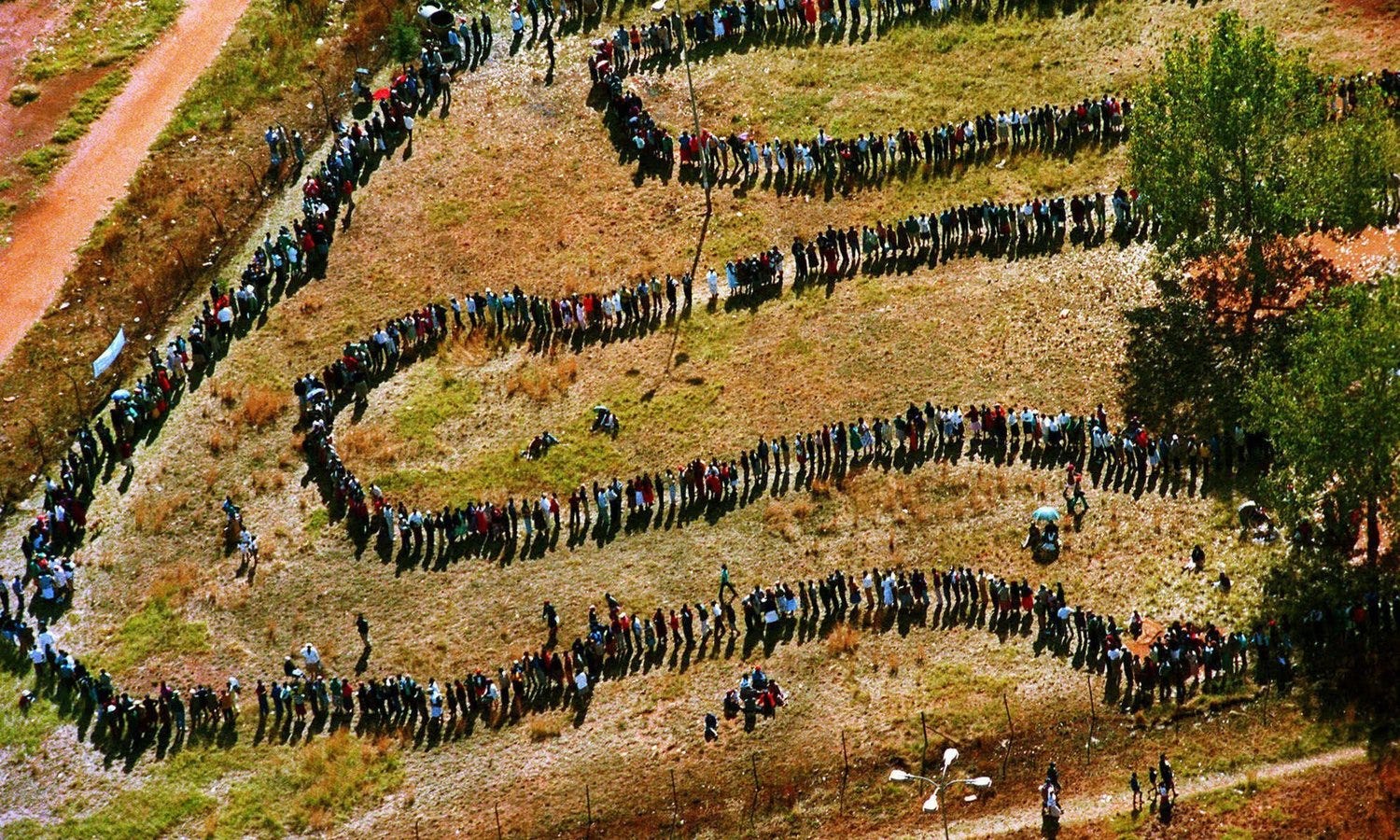
The deepest escape is rarer than either, and it is the one that rhymes most closely with the American Civil War. It is not exit but revision. The founding creed is not defended to the last by force, and not merely surrendered. It is rewritten.
Apartheid was a transcendent organizing idea, and by the late 1980s it had stopped persuading even many of the people it was built to serve. The pattern offers a familiar ending here, a security state digging in, the rifle holding what the idea no longer could, a long descent into force. South Africa came to the edge of exactly that. And then, in February 1990, the president of the apartheid state stood up and unbanned the movements his predecessors had outlawed, released the man they had jailed for twenty-seven years, and opened negotiations to write a new country. Four years of talks, repeatedly broken by real violence and repaired, produced an interim constitution and, in April 1994, an election in which everyone could vote.
This is recoherence in its fullest form. Not a soldier replacing a prophet, and not one faith swapped for the nation, but a society taking its founding idea, the one that had failed, and deliberately replacing it with a broader one that could persuade again. It is what the United States did through its Civil War, performed in living memory and largely by negotiation rather than by arms. It is the costliest and most generative move a society can make, and the rarest, because it requires the people holding power to give up the creed that justified their holding it.
Saudi Arabia and India: Where The Pattern Cannot Run
Two last cases, brief, because their value is to mark the boundary of the law. They are the places the pattern never runs, and they show why.
Saudi Arabia is the substitution that never happens because there was never anything to substitute. Everywhere else in these essays the faith and the state begin as distinct things that eventually compete, and the soldier resolves the contest. The al-Saud welded throne and pulpit together at the founding. The religious establishment was never an independent prophet that could be demoted, because it was joined to the state from the first day. No separation, no substitution, no soldier stepping between them. The cycle needs two things that can come apart. Where they were fused, it does not turn.
India is the other boundary, and the cleaner experiment, because it shares a birth with a case we have already placed. India and Pakistan were severed from the same empire in the same week. Pakistan, founded on a religious premise, saw the army become the decisive actor and govern for much of its history, the pattern running on time. India, founded on a secular constitutional idea, built a powerful army that never took the state. Same moment, same inheritance, opposite outcome. The variable that diverged was not the creed but the institutions, the civilian habits and federal bargains that kept the soldier subordinate. India is the proof that the soldier is not fated to come. He comes when nothing is built to keep him out.
What The Escapes Have In Common
Lay the exceptions side by side and they stop looking like exceptions. They look like a single move, performed in different keys.
Chile surrendered the chair by its own rules. Spain’s regime reformed itself out of existence. Poland’s state was out-cohered by a counter-faith and negotiated its exit. South Africa rewrote its founding idea outright. India built the institutions that made the question moot. In every case the soldier stayed out, or left, because something was paid to keep coherence alive by means other than force, an heir’s restraint, a church’s parallel order, a negotiated constitution, a civilian habit too strong to break.
This is the law beneath the pattern. Coherence is purchased, never given. The soldier takes the chair when the faith has gone quiet and no one is willing to pay to renew it, so that only force remains. He stays away when someone pays in time, in reform, in negotiation, in the patient construction of institutions that renew the idea rather than enforce it. The first essay described what happens when the payments stop. These cases describe the harder thing, the societies that kept paying, or began again before it was too late.
The soldier is always waiting in the room. What keeps him out of the chair is never the strength of the original creed. It is whether anyone is still willing to pay to keep the creed worth believing.
BONJOURHI! INSTITUTE ANALYTICS · MONTREAL · 2026